Feeds:
Posts
Comments

Archive for September, 2014

Huntingdon, England

The first use of the name Huntington to refer to the town on Long Island was in 1657 when the inhabitants of the town entered into an agreement with Jonas Holdsworth “ffor to Schoole” the children of the town.  The first purchase of land from the native inhabitants had been made four years earlier.  It is unknown for certain how the name Huntington was chosen.

One view holds that the town was named in recognition of the abundance of game that made it a good place for hunting.  Such a descriptive name would be consistent with the naming of the neighboring town to the west which was named for the abundance of oysters in its bay.  If the town is named for its good hunting, why did the settlers use the ancient Anglo-Saxon suffix “ton” meaning town to create the name?  Why not instead call the place Huntingtown?
image

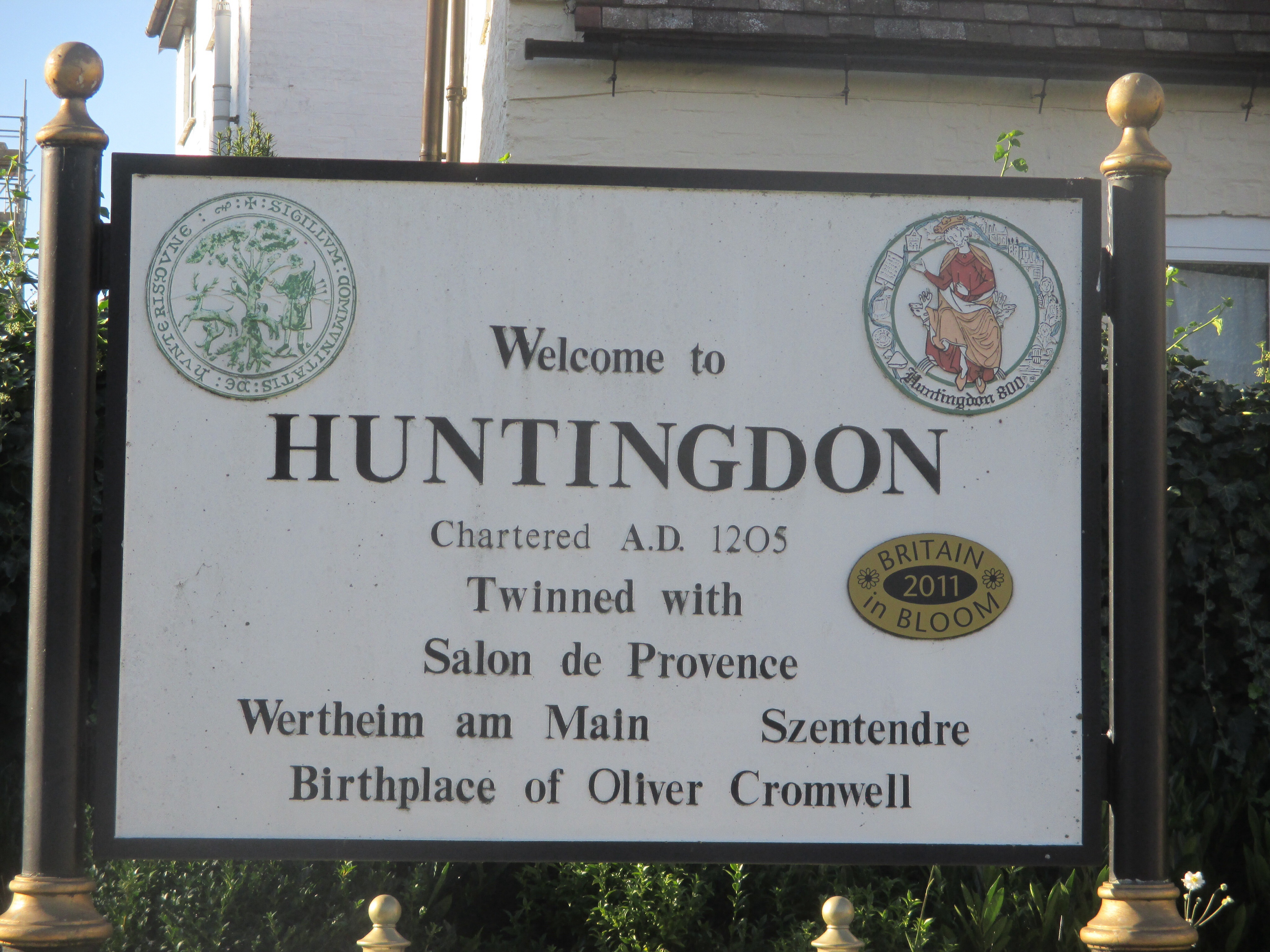
The other view is consistent with the practice throughout New England in the seventeenth century; that is to name the new settlement after a town in England.  Most early New England names have English precedents: Boston, Plymouth, Wethersfield, Cambridge, Southampton, Hempstead, etc.  Under this view, Huntington is named for Huntingdon, a town 75 miles north of London.  It does not seem that any of the early settlers came from Huntingdon, but the name would have been chosen in honor of Oliver Cromwell, who dissolved Parliament three weeks after the First Purchase and was named Lord Protector eight months later.  Were the settlers trying to curry favor with the new head of state?  As Puritans, they would have been sympathetic to Cromwell and would have supported him.

So what about this place Huntingdon?  The suffix “don” has a different meaning than “ton.”  While “ton” means enclosure or town, “don” means hill (see “The Place Names of Huntingdonshire,” by Professor W.W. Skeat published in Proceedings of the Cambridge Antiquarian Society 14 October 1902 to 18 May 1903, No. XLIV). The name Huntingdon was originally Huntandūn meaning “Hunta’s hill.”  Hunta was presumably a person or perhaps just a reference to a hunter, which brings us back to hunting.  It is interesting to note that a 1662 map of Huntingdon spells the name with a “t” instead of a “d.”
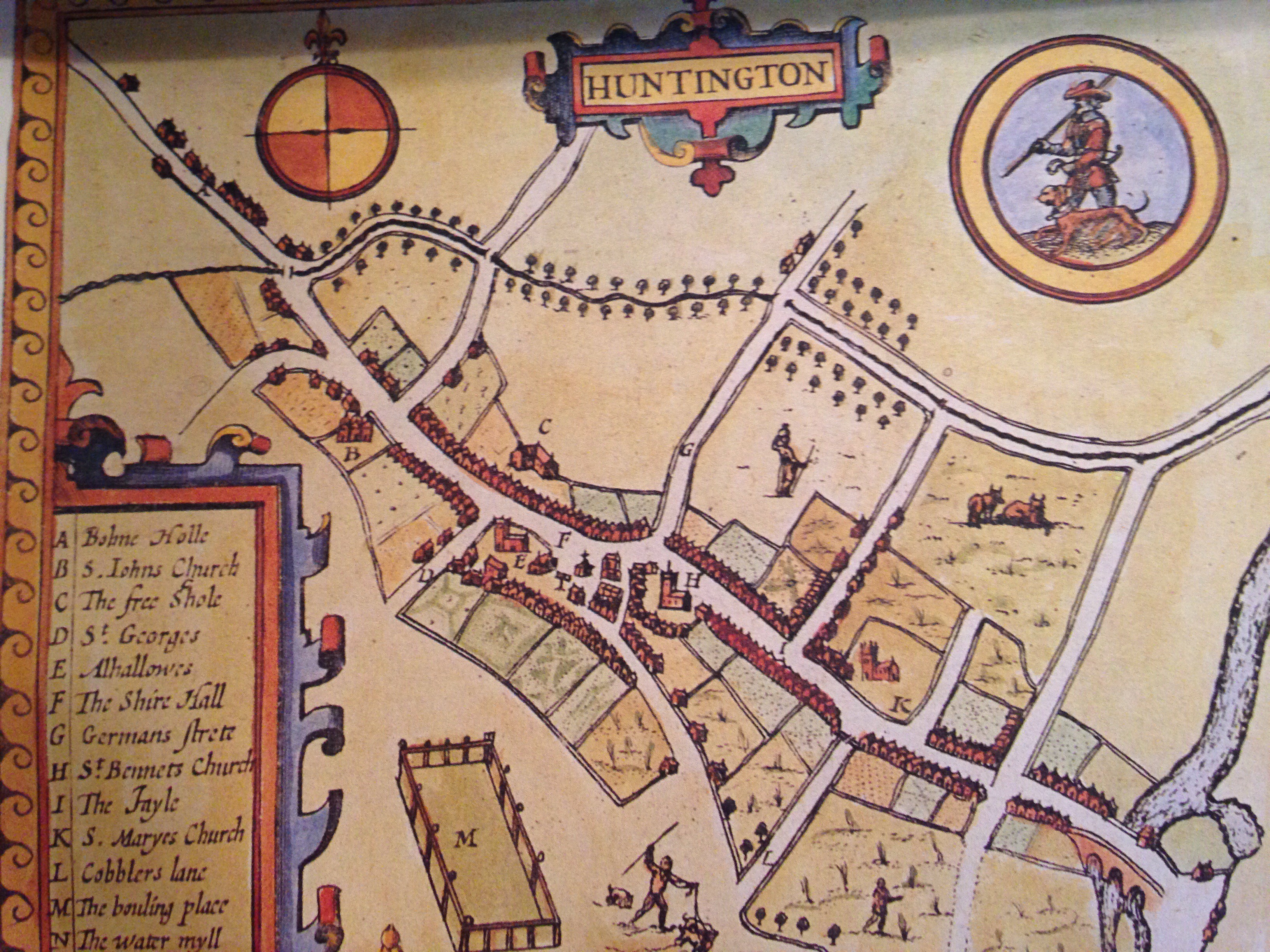
1662 map of Huntingdon, note the spelling of the name.

1662 map of Huntingdon, note the spelling of the name.

Huntingdon is the principal town in the old shire or county of Huntingdonshire, which was abolished in 1974 and merged with Cambridgeshire as part of a government reorganization.  Huntingtonshire lives on, however, as a district council within Cambridgeshire.  Huntingdon, the town, has its own governing body.  In this respect, Huntingdon would be equivalent with a village under New York law, Huntingdonshire District would be equivalent to a Town, and Cambridgeshire would be equivalent to a county.  In fact, Huntingdonshire district has a population of about 170,000, similar to the Town of Huntington’s population of 203,000 (Huntingdonshire, however, is much larger at 350 square miles to Huntington’s 94 square miles).

Huntingdon received a charter from King John in 1205, although the settlement in the area extends back to Roman rule in England if not before.  The town is situated on the Roman road from London to York so it became an important market town.  It was a center of Viking activity in the area until King Edward the Elder drove the Vikings out in 921.  The town declined during the Middle Ages and was almost wiped out by the Black Death in 1348.  Where once there had been 16 churches, by the 1530s there were only four.
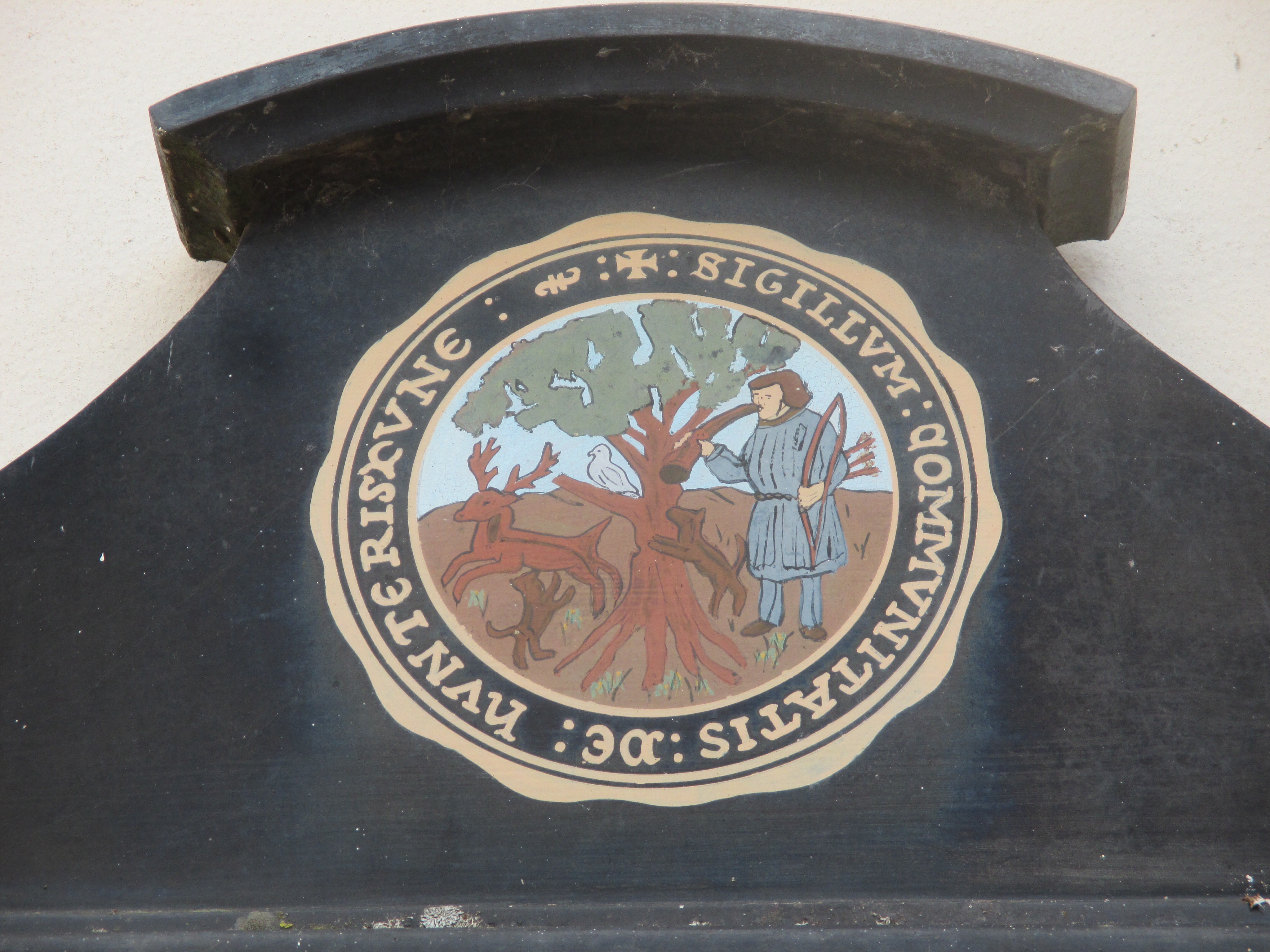
The seventeenth century Huntingdon Borough Seal.  Showing a hunter and his dogs with a deer.

The seventeenth century Huntingdon Borough Seal. Showing a hunter and his dogs with a deer.

A small Benedictine nunnery, known as Hinchingbrooke Priory, stood northwest of the town.  By 1534, there were only the prioress and three nuns in residence with annual revenues of just £17.  The hospital of St. John the Baptist was established in the center of town in 1160.  Both of these institutions were dissolved as part of Henry VIII’s seizure of Catholic Church properties in the 1530s and 40s.  The old hospital was converted to use as a school.  The Benedictine priory and other more valuable church properties were given to Richard Williams, the nephew of Henry’s chief minister Thomas Cromwell (who is the subject of two bestselling books by Hilary Mantel, Wolf Hall and Bring Up the Bodies).  In gratitude, Williams changed his family name to Cromwell.
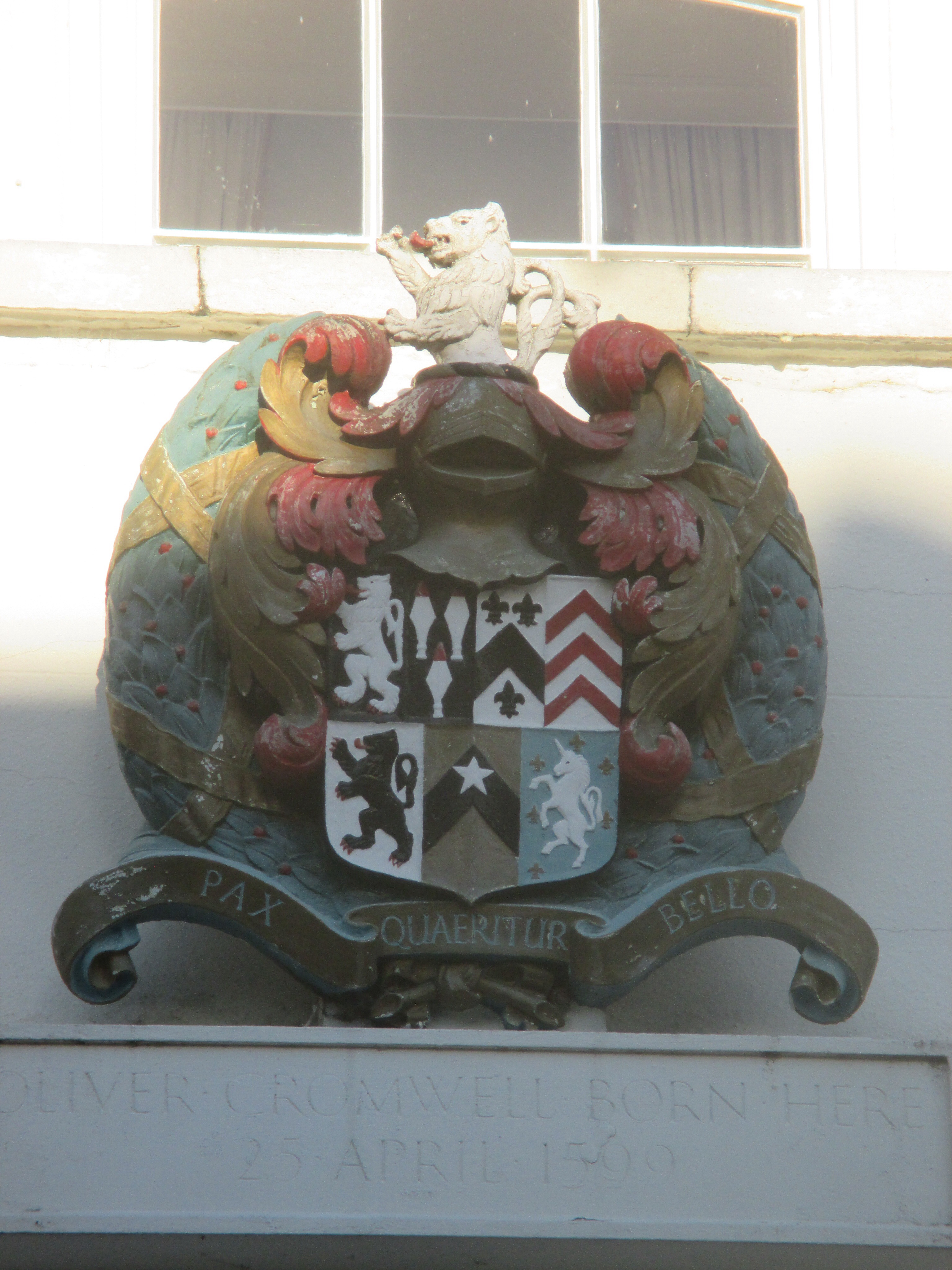
The Cromwell family Coat of Arms.  the lion rampant at the top was used in the Town of Huntington's Coat of Arms prepared in for the U.S. Bicentennial.  The town's coat of arms is no longer used in light of its association with Oliver Cromwell, who has been accused of genocide in connection with his actions in Ireland.

The Cromwell family Coat of Arms. the lion rampant at the top was used in the Town of Huntington’s Coat of Arms prepared for the U.S. Bicentennial. The town’s coat of arms is no longer used in light of its association with Oliver Cromwell, who has been accused of genocide in connection with his actions in Ireland.  It should be noted that the lion rampant is a common symbol in medieval heraldry.  

Which brings us to the reason we care about Huntingdon at all.  Oliver Cromwell, a nephew of Richard Cromwell’s grandson, was born in a house at the north end of town in 1599.  When he was 11 years old, he attended the school which had been established in the old Hospital of St. John the Baptist.  As an adult he lived in nearby St. Ives and Ely.  Cromwell was elected to Parliament in 1640.  He later helped raise troops in Huntingdonshire for the Parliamentarians’ New Model Army during the English Civil Wars of the mid-seventeenth century and he defended the area from royalist forces.  Cromwell’s successes were mostly military; he was only a minor figure in Parliament until the Rump Parliament 1650-53.  He dissolved that Parliament on April 20, 1653 and in December of that year was made Lord Protector, a title he held until his death from natural causes in 1658.

The early settlers of Huntington, Long Island, would have supported Cromwell in the Civil Wars.  In naming their new town they could have been honoring his achievements.  As an independent settlement with little direct contact with England, it is less likely they needed to curry favor with the new leader.  Of course, while Cromwell may have been popular with Huntington’s Puritan settlers, his actions in Ireland have rendered him a controversial figure to say the least.

Cromwell was not the only well-known figure from Huntingdon.  His uncle, also named Oliver, spent lavishly and in 1627 had to sell Hinchingbrooke.  He sold the family estate to Sidney Montagu, whose son Edward became the first Earl of Sandwich.  The family dominated the political, social and economic life of the county well into the nineteenth century.

The Fourth Earl of Sandwich

The Fourth Earl of Sandwich

It was the fourth Earl of Sandwich who is credited with placing meat between two pieces of bread so that he could eat without interrupting his gambling; or perhaps it was while he was busy working.  He was also the First Lord of the Admiralty during the War of American Independence and approved Captain James Cook’s round the world voyage.  Cook named the Sandwich Islands (now known as Hawaii) in his honor.

Another notable Huntingdonian was John Major, who served as Prime Minister of the United Kingdom from 1990 to 1997.  His Parliamentary constituency was Huntingdon.

Today, Huntingdon is a quiet community that preserves much of its historic charm.

Huntingdon's pedestrianized High Street.

Huntingdon’s pedestrianized High Street.

All Saints Church in Huntingdon which dates to the Norman period
All Saints Church in Huntingdon which dates to the Norman period

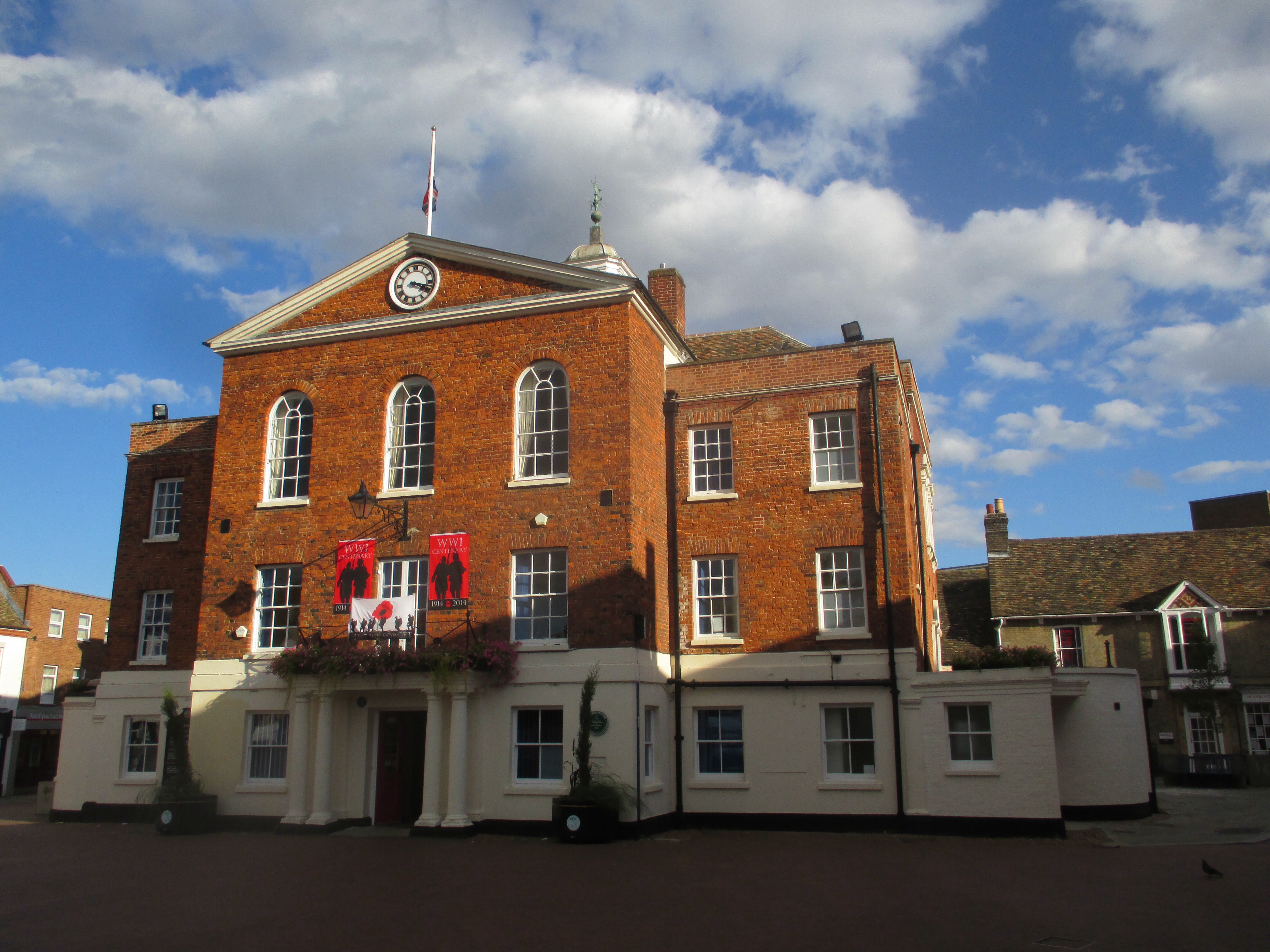
Huntingdon Town Hall built in 1740

Huntingdon Town Hall built in 1745

The Assembly Room in Huntingdon's Town Hall

The Assembly Room in Huntingdon’s Town Hall

The stone bridge between Huntingdon and Godmanchester.  Built in 1332, now open to cars!

The stone bridge between Huntingdon and Godmanchester. Built in 1332, now open to cars!

The sole remaining part of the Hospital of St. John the Baptist, later the school Oliver Cromwell attended in 1610.  Now the home of the Cromwell Museum.

The sole remaining part of the Hospital of St. John the Baptist, later the school Oliver Cromwell attended in 1610. Now the home of the Cromwell Museum.

Facts about Huntingdon
Facts about Huntingdon

Read Full Post »

Robert Seeley

Little has been written about the earliest English settlers of Huntington. Although the deed for the First Purchase is dated April 2, 1653, it is believed settlers may have arrived before that date. Initially the population would have been small. In his history of Long Island, Silas Wood states the initial population of the town amounted to eleven families. But a review of the published Town Records reveals that between 1653 and 1663, some seventy names appear in the Huntington Town Records. If each named man were a head of household with an average of five members that would mean a population of a few hundred at even this early time period.

However many there were, all were English. Based on preliminary research it seems the settlers came from a variety of counties in southern England. Most settled first in Massachusetts (especially Salem) and Connecticut before arriving in Huntington. None appear to hail from Huntingdon, the Long Island town’s English namesake. One, however, was born in Huntingdonshire, the small county of which Huntingdon was the principle town.[i]

Robert Seeley was born in  Bluntisham-cum-Earith, Huntingdonshire in 1602. As a teenager he went to London where he joined the cordswainers or shoemakers guild and attended the puritan church of John Davenport. In 1630 he joined John Winthrop on his voyage to Massachusetts as part of the Great Migration. He was one of the first settlers of Watertown, Massachusetts and a few years later was one of the founders of Wethersfield, the first English settlement in Connecticut.

Seeley served as second in command to John Mason during the Pequot War of 1637 and helped lead the attack on a Pequot village at Mystic that resulted in the massacre of hundreds of Pequots. During the war he was shot in the eyebrow with a flat headed arrow. After the war, Seeley joined his minister from London, John Davenport, and merchant Theopilus Eaton when they established the Colony of New Haven. Eaton was the first Governor of the Colony of New Haven.

In 1659, Seeley returned to England for a few years. He came back to the new world in 1662 and that is when we find him in Huntington. In February 1662, at a town meeting in Huntington, it was ordered that the boat should be sent to the mouth of the Connecticut River (presumably Saybrook) to fetch Captain Seeley.

In December 1662, Seeley purchased Eatons Neck from William Jones. The neck was first acquired from the native inhabitants by Theopilus Eaton in 1646. Jones acquired title to the neck by virtue of his marriage to Eaton’s daughter Hannah. The following August, Seeley asked that a confirmation of the deed bearing the marks of five natives, witnessed by two Englishmen, be recorded.

Seeley appears to have quickly become an integral part of the Huntington community. In April 1663 he was nominated as one of three magistrates for the town. The names were sent to the court in Hartford for confirmation. Connecticut records show that the next month he was appointed magistrate as well as the chief military officer for Huntington charged with training soldiers.[ii]  He was also one of the men chosen to review “all lands allredy layd out in filedes and to record the ownar and quantity he has taken up in the town Booke.” The men were also empowered to lay out new fields or home lots at a rate of six pence per acre. Seeley had been assigned similar responsibilities to lay out lots and roads in Watertown Massachusetts in 1634. He also was asked to measure the Huntington Town Common to determine how much fencing was needed to enclose it.

But within a few years, the town sued Seeley over title to Eatons Neck. In all, there were three such suits by the town against the owner of Eatons Neck. It is unclear who the defendants were in the first two cases, but they were found to have good title to the Neck. In 1666, the final suit was heard at the Court of Assizes in New York. The Court found in favor of Seeley, who had already sold the Neck to George Baldwin in July 1663. That sale was confirmed in June 1667 by Richard Nicholls, Governor of the New York Colony.

It is interesting to note that Robert Seeley was one of the eight men named in the Nicholls Patent of October 1666. Those same eight names appear in the Dongan Charter of 1688. By the time of the Nichols Patent, Seeley was no longer in Huntington. In 1665, Seeley helped found the town of Elizabeth, NJ. By the time of the Dongan Charter, 22 years later, he was long dead having died in Manhattan in 1667.[iii]

[i] Huntingdonshire was abolished in the 1970s and the territory it encompassed was made a part of Cambridgeshire.

[ii] The information about Seeley being appointed Huntington’s chief military officer comes from a genealogy website, http://www.seeley-society.net/nathaniel/sgs1.html. I have not consulted the Connecticut records, which is something Charles R. Street, who compiled and annotated the Huntington Town Records in 1880s suggested would be helpful in understanding Huntington’s earliest history.

[iii] Mysteriously, Robert Seeley also appears as a witness on a deed recorded in 1669.  It may be that the deed was made a few years earlier and not recorded until 1669.

Read Full Post »

We cherish the vibrancy and charm of Huntington village and we are proud of the area’s historic character embodied in various buildings throughout the village. But many feel the village is threatened by fire and redevelopment. The rash of fires (five in the past six months) and proposals for three story buildings in the village may seem alarming, but fire and taller buildings have long been a part of the village scene. In fact, several major fires directly shaped the village of today.

The fire that produced the most dramatic change in the village landscape was in October 1869. To understand its impact, you have to understand the early development of Huntington.

When Huntington was established in the middle of the seventeenth century, the settlement clustered around the Town Common on Park Avenue. The area we now know as downtown Huntington was marshy and sparsely settled. The area was bisected then as now by Main Street which connected Oyster Bay to the west with the area near the Town Common. Only five other streets existed where downtown Huntington is now. On the north side of Main Street were the road to the west side of the harbor (Wall Street), and the road to Lloyd’s Neck (West Neck Road). To the south there was the road to Long Swamp (New York Avenue). Near the Conklin House, New York Avenue forked to the southwest to reach West Hills (now High Street and Oakwood Road). Finally, Woodbury Road led to the settlement of the same name.

Nathaniel Williams’ inn stood on the north side of Main Street, opposite the road to Long Swamp (we now call that road New York Avenue; Long Swamp is the area near the intersection of Depot Road, Maplewood Road and Melville Road). Nathaniel’s son Timothy succeeded his father in running the inn and also operated a store and for a time the post office from the same building. In 1828, Timothy Williams sold the inn to Zophar Oakley, who a few years earlier had purchased property at the northwest corner of Main Street and Wall Street to operate a general store. Oakley’s purchase encompassed 12 acres on the north side of Main Street from Wall Street east to what is now the Trade School property.

Oakley continued to operate the Williams store, which was a true general store offering a wide variety of merchandise—“almost every article called for in the country.” Oakley prospered at his new location and became a very successful and well-respected merchant. In 1845, he built a house northeast of his new store. The property included a spring fed pond, greenhouses, gardens, and orchards. It was considered one of the garden spots of town. At the southwest corner of his property, along Main Street near Wall Street, Oakley rented stores to other merchants. By the 1850s, this row of stores on the north side of Main Street from Wall Street to what is now New York Avenue was known as the Empire Block.

In 1856, Oakley’s son-in-law, Carlos Stuart, and a partner, William A. Conant, took over Oakley’s store and purchased the Empire Block. Less than two years after the sale, Zophar Oakley died. Stuart then gave up his partnership with Conant and transferred his interest in the property to Conant. A year later, Conant, who would later represent Huntington in the State Assembly, sold the property to William Miles of New York City. Miles leased the old store to Baylis & Wells starting in 1862. In 1865, Timothy Baylis purchased the property apparently for his son Hiram Vail Baylis, one of the partners operating the store. Hiram soon gave up the store because of ill health and went into farming. But he held onto the property and rented the store out.

Around this time, at the close of the Civil War, the railroad reached Huntington. Previously, the best route to the city markets was by water. The railroad, of course, was located two miles south of the village. It was thought that a direct road connection between the harbor and the railroad station would be desirable. William Conant by now was the area’s representative in the State Assembly. He introduced a bill to create such a link. The new road would also help to drain the marshy land along the route, but would be expensive to build, which arose opposition from residents who would have to foot the bill. A debate also arose concerning the proper location for the road. The most direct route would extend the existing road through the old general store and continue up to the east side of the harbor where the Town dock was located. An alternate suggested route would start the road east of the terminus of the South Road (as New York Avenue was then known), between the Baylis property and Zophar Oakley’s old property now owned by his daughter Catherine and her husband Carlos Stuart. That route would not be conducive to the smooth flow of traffic.

There the debate stood until October 1869. On the night of October 13, the circus was in town. The old general store was now run by the Mamlok brothers, who closed the store at 8:00 that night. Perhaps they went to the see the circus. When they arrived back at their store at 12:30 a.m., they were surprised by three thieves, who assaulted them, tied them up, stole their cash ($472), and set fire to the store presumably to cover their crime. The brothers managed to escape. But the fire destroyed their store, the adjoining house of landlord Hiram Baylis and the flour and feed store of Pearsall & Conklin to the west. Other buildings on the block were damaged as well.

Baylis began building a new brick house slightly to the east within a couple of weeks. That house still stands on the northeast corner of Main Street and New York Avenue. Conklin also rebuilt his store, but that structure has since been replaced.   The most lasting impact of the fire was that it cleared the way for the extension of New York Avenue to the harbor directly across from the existing road. The State Legislature passed the Road Bill on April 22, 1870. The road was still not popular with the local residents. In June they voted 403 to 0 in opposition to the road. But it was too late; construction was well underway. By July 1870 the road extended from the harbor down to Shoemaker Lane—now known as Mill Lane.

One of the tenants who lost everything in the 1869 fire was lawyer Thomas Young, who had an office on the second floor. Young eventually moved his office across the street to a block of buildings owned by the Brush Brothers. And there, bad luck followed him.

Two decades after the fire that opened the way for the New York Avenue extension, the block on the south side of Main Street east of New York Avenue was occupied by a row of wood frame buildings. On the corner was the general store of Henry S. and James M. Brush. Next was the Bank of Huntington, started by the Brush brothers and Douglass Conklin as a private institution in 1886 and receiving a state charter on July 1, 1888. Then were the stationery store of Edward C. Grumman and the jewelry store of George F. Barr. On the second floor above the stores was the law office of ill-fated lawyer Thomas Young. At the end of the Brush block was the post office and above that the law offices of Charles R. Street, who was the postmaster. To the east of the Brush block were the carriage factory of Ebenezer Jarvis and the harness shop of James B. Scudder and the Second Presbyterian Church.

In the early morning hours of Wednesday, September 12, 1888, an employee of the Brush firm noticed smoke rising from the rear of the post office, which was in the middle of the block. He quickly alerted the Brush family who lived in quarters behind their store. The family barely got out of the house in time and took refuge in Hiram Baylis’ house across the street. The night watchman soon discovered the fire and rushed to retrieve the books and papers from the bank. Soon the alarm at the firehouse on Wall Street was sounded. The paints in the Brush store and the oils in the carriage factory accelerated the fire, which quickly spread both east and west. To the west it stopped at New York Avenue; to the east, it spread as far as the Second Presbyterian Church. Seeing that the church could not be saved, residents worked to save the manse next door by covering the wood roof and sides of the building with wet carpets. They were successful.

The fire destroyed every building along Main Street from New York Avenue to the manse. Fortunately, many of the contents of the buildings were removed before they too were destroyed. In the aftermath of the fire, the Brush brothers built one of the most imposing structures ever erected in Huntington village. Work commenced the month after the fire and by April of the next year, the three-story brick building was ready to receive tenants. As it turned out most of the former tenants returned to the building from temporary quarters throughout the village.

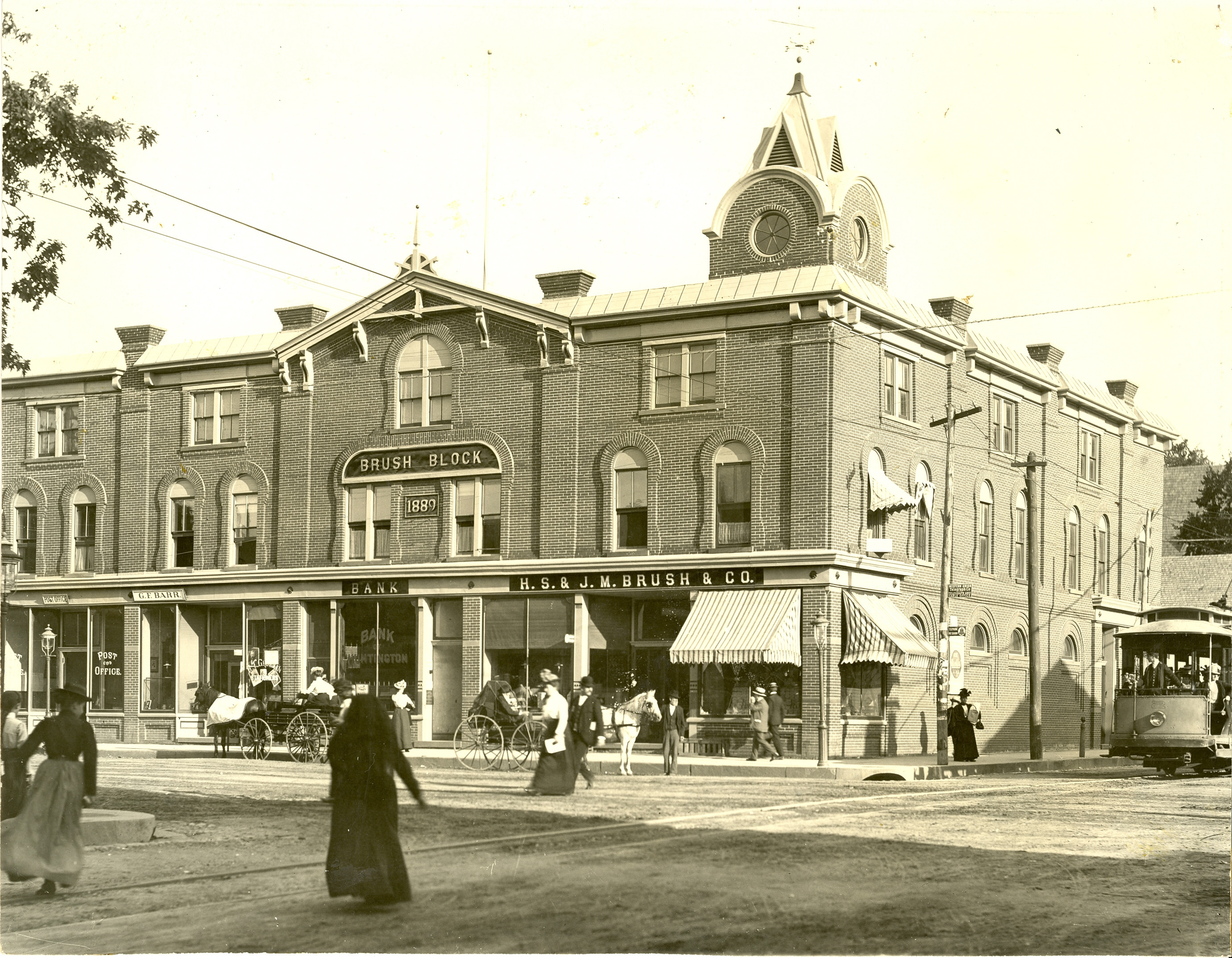
The Brush Block Built 1889

The Brush Block Built 1889

The building still exists, although it has lost its third floor. The third floor on the western one third of the building was removed in 1927, supposedly to make the building more attractive. It may be that the extra space was removed to save on property taxes. The rest of the third floor was removed in 1937 when the Long Island Lighting Company extensively rebuilt that part of the building.

The Brush Block was not the first three-story building in the village. The Leaycraft building at the southwest corner of Main Street and New Street (most well known in recent years as the site of Rubin’s Luggage and torn down in 2004) was a three-story brick building erected in 1859. Other prominent three story buildings include the O.S. Sammis building at the northwest corner of Main Street and New York Avenue (built in 1884); the Masonic Lodge on New York Avenue (built in 1905); Gallagher’s Hotel at 25 Wall Street (built in 1908); and the Romano building at 307 Main Street (built in 1909).

A fire a few years after the Brush Block fire also resulted in a new three-story building. In 1895, the carriage factory on Green Street was completely destroyed. It was replaced by the three-story brick building that still stands at 7 Green Street.

During the building boom of the Roaring Twenties, the three-story Hotel Huntington at the corner of New York Avenue and Fairview Street was built. Two years earlier, another three-story building was built on New York Avenue, the Huntington Office Building. The office building opened on May 1, 1927 “In the center of the growing city.” It featured six stores, a bowling alley and billiard parlor on the first floor; offices on the second and third floors; and the first elevator in town.

The building still stands at 375-377 New York Avenue, but without its third floor thanks to a devastating fire in February 1960. The fire was one of three Monday night fires in a two-month period, raising suspicions that an arsonist was to blame. The fire burned for eight hours through the night as firefighters poured three million gallons of water on it. Like other village fires there was no loss of life; although an attorney working late in his office had to be rescued from the roof of the building by an aerial ladder.

The next day, the west side of New York Avenue was closed in front of the building due to fears that the ruined shell would collapse. The owner was ordered to either make the building safe or demolish it. He indicated he would demolish it. But three months later, he instead applied for a building permit to partially demolish the gutted building to two stories and rebuild. The building we see today is mostly a reconstruction with only two floors instead of three. In 1964, the building welcomed the newly created district court.

The fires of 2014, thankfully, have not been as destructive as some earlier fires. But some, like the March 1 fire at 425 New York Avenue, may result in new three-story buildings. That too would be consistent with Huntington’s earlier building practices (an inspection by the National Board of Underwriters in 1900 revealed that 98% of the buildings in the village were two or three stories high). Whether it will be as welcome as the Brush Block is another question.


Read Full Post »

I have completed a book on Cold Spring Harbor for Arcadia Publishing’s Images of America series.  The book is available at Book Revue and local stores in Cold Spring Harbor as well as online at http://www.arcadiapublishing.com/9781467122245/Cold-Spring-Harbor.  Below is the introduction to the book.

CSH Book

Water is the defining characteristic of this place now called Cold Spring Harbor.   To the indigenous inhabitants it was known as Wawepex, or “at the good little water place.”   The European settlers of the seventeenth century named the area after its abundance of fresh water springs. The word “harbor” was added in 1826 to avoid confusion with the town of the same name on the Hudson River (throughout the nineteenth century, most locals continued to use the two word name). The name reflects the essential role water, both fresh and salt, has played in the area’s history. The fresh water springs provided drinking water. The stream flowing from the south provided power for local mills. The harbor provided an outlet for trade up and down the eastern seaboard and a starting point for whaling voyages to the far side of the globe.

Even the most disinterested resident knows that Cold Spring Harbor was a whaling port. But Cold Spring Harbor’s whaling period was relatively brief, lasting just over a quarter century from 1836 to 1862. There is far more to Cold Spring Harbor than whaling.

Cold Spring Harbor has been inhabited for thousands of years. Unfortunately, other than some arrowheads, tools made from animal bone, hide scrappers, and pottery shards, little evidence of pre-European settlement survives. For that matter much of the early European settlement is also unknown. The community is a hamlet within the Town of Huntington and was the western edge of Huntington’s First Purchase in 1653.

Within ten years of the First Purchase, at least three permanent homes had been established in Cold Spring Harbor: Jonathan Rogers log house on the east side of what is now Harbor Road about a half mile south of the head of the harbor, the Rudyard house on the north side of Main Street just before the intersection with Goose Hill Road, and the Titus house on the east side of Goose Hill Road across from what is now Titus Lane.

As farms became established, the need for a mill to grind grain was recognized. In order to avoid the need to bring their grain to mills in either Huntington or Oyster Bay to be ground, permission was sought to build a gristmill in Cold Spring Harbor. After two unsuccessful attempts by others, John Adams in 1682 built a dam across the Cold Spring River, an impressive name for the small stream that runs north through the valley from the present site of the rail road station to the harbor. On this dam Adams built both a gristmill and sawmill. The gristmill was not successful; the sawmill was.

In 1700, Benjamin Hawxhurst built a woolen mill near the present site of the Fish Hatchery. Later in the early nineteenth century, the Jones family operated two very successful woolen mills. The upper woolen mill was located upstream on the site of the 1682 mills at the southeast end of St. John’s Pond. This mill was for weaving.   The lower mill was located on the southwest side of the harbor near the entrance to the Cold Spring Harbor Laboratory property. The lower mill was powered by water fed to the site by means of a wooden pipe carried over the road on a trestle from a small pond on the south side of the highway and part way up the hill. The lower mill was used for spinning. Together the two woolen mills produced broadcloth, blankets, and coverlets. Starting in the 1870s, the upper mill was used by George W. Earle as a sawmill and organ factory.

In 1782, Richard Conklin built a paper mill near the intersection of Main Street and Shore Road.

Finally, in 1791, the Hewlett family built a gristmill on the east side of the harbor about a quarter of a mile from the head of the harbor. This mill was powered by water from St. John’s pond that ran through a canal between the road and the harbor. The mill burned down in 1921, but traces of the canal can still be seen today.

Cold Spring Harbor was made a Port of Delivery by an Act of Congress on March 2, 1799. As a Port of Delivery, a Surveyor of Customs was appointed, who had the “power to enroll and license vessels to be employed in the coasting trade and fisheries, and to enter and clear, and grant registers and other usual papers to vessels employed in the whale fisheries.” When Customs Districts were reorganized in 1913, the Cold Spring Harbor office was abolished.

Coastal trading was a thriving activity into the early twentieth century. Small shipyards produced the schooners needed to transport goods not only from Cold Spring Harbor to New York City, but up and down the east coast, to the West Indies and beyond. In the 1840s typical cargo would include rice, sugar, cigars, logwood, mahogany, coffee, palm oil, and ivory. In later years, coal, sand and gravel were typical cargos. An indication of the scope of coastal trading is the fact that in 1883 99 ships were registered from Cold Spring Harbor.

The woolen mills and gristmill were two of the enterprises run by the Jones family. The gristmill came into the Jones family through the marriage of John Jones to Hannah Hewlett. The five sons of John and Elizabeth Jones—especially John H. Jones and Walter Restored Jones—were the leading entrepreneurs in Cold Spring Harbor’s early history. In addition to their mills, they operated a general store near the gristmill, a shipyard on the east side of the harbor, and a barrel factory on the west side of the harbor. The bungs used as stoppers on the barrels gave rise to the name Bungtown. In order to get their various products to market, in 1827, brothers John and Walter R. Jones incorporated the Cold Spring Steam Boat Company, built a dock on the east side of the harbor and later procured the steamboat American Eagle to transport their goods to the New York market.

By the 1830s, foreign competition had undermined the profitability of the woolen business. In 1836, the brothers decided to expand their business ventures to include whaling. At first they personally owned the whaling ships, later they incorporated along with other prominent Cold Spring, Huntington, and Oyster Bay citizens. From 1836 to 1862, nine ships sailed from Cold Spring Harbor on voyages lasting up to two years. Woolens from the local mills, barrels from Bungtown, produce and meat from local farms, and other local products were used to outfit the ships for their months long journeys to as far as Alaska. The venture was successful, but the death of John Hewlett Jones in 1859 and of Walter Restored Jones in 1855 as well as the discovery of petroleum in Pennsylvania in 1859 led to the inevitable demise of Cold Spring Harbor’s small whaling industry.

The economic activity spurred by the whaling ventures was soon replaced by tourism—still a mainstay of the local economy. At the same time, shipyards, a marine salvage yard, sail makers, and blacksmiths continued Cold Spring Harbor’s industrial traditions.

World famous panorama artist John Banvard settled in Cold Spring Harbor in 1852. Banvard made a fortune exhibiting his half mile long painting of the Mississippi River. Audiences would be seated in a specially built auditorium while canvases on either side of the room were advanced from one scroll to another to give the illusion of floating down the river.   After a successful European tour, which included a private viewing for Queen Victoria, he built a castle-like home reportedly inspired by Winsor Castle and named it Glenada in honor of his daughter Ada.

The home was later converted into a luxurious summer resort hotel, which was joined by two others, Forest Lawn next to the Glenada and Laurelton, on the west side of the harbor. Less wealthy visitors could stay at Van Ausdall’s hotel. Day-trippers took steamboats out from New York City by the thousands to visit local picnic groves along the harbor’s shores. Some wealthy New Yorkers built homes of their own overlooking the harbor.

In the decades before the turn of the twentieth century, the old factory buildings on the west side of the harbor were put to new uses. First in 1883, New York State saw the advantages of the area’s fresh water springs to operate a fish hatchery to raise fish to stock local lakes and rivers.  A few years later, the Brooklyn Institute of Arts and Sciences established a field station on the harbor’s western shore.   That small field station has now grown into one of the leading genetics institutions in the world.

Close proximity to New York City, of course, meant that suburbanization was inevitable. The trend began slowly in the 1920s, but was temporarily halted by the Great Depression of the 1930s. It resumed in full force after World War II. This explosive growth not only in Cold Spring Harbor but throughout the Town of Huntington led directly to the establishment of one of the community’s most distinctive assets today—its school system. Originally four separate local school districts, students who wished to continue with high school, attended Huntington High School until 1958. When that district stopped accepting out of district residents, the local districts banded together and built their own high school, now one of the top rated schools in the country.

Read Full Post »