Feeds:
Posts
Comments

Archive for September, 2024

            What’s in a name?  When trying to promote development of an area, its name is important, especially if the name is not appealing.  Think Mosquito Cove (now Glen Cove) or Drowned Meadow (now Port Jefferson).  In Huntington, what had been known for over a century as Gallows Hill is now Fort Hill.

            The story begins during the American Revolution when Huntington was occupied by the British.  To guard their position in Huntington, the British built a fort at the eastern approach to the Town Common.  The fort stood at the intersection of today’s East Main Street and Maple Hill Road, at the point where East Main Street descends to the Park Avenue valley.  Traces of the fort could still be seen as late as a century after the war but are now lost.

            At the end of the war, the area near the fort was the site of a hanging.  Over the years, the identities of the men hanged and even which side they were on became confused.  In one telling, the two men were British soldiers who rode to their execution on their coffins.  The other version claims the men were American spies.

            In 1975, Huntington’s Bicentennial Committee went with the American spies version of the story and erected a historic marker on Huntington Bay Road.  The marker text: “Near this spot, two American Martyrs were hanged by the British during the Revolution.”  Why that particular spot was chosen to place the marker is not known.

            Recent research by David M. Griffin, who has written two books about the American Revolution on Long Island,* confirms that the Bicentennial Committee chose the wrong version.  The two condemned men were Isaac Algar and Nathaniel Parker, who fought for the British.  In August 1783, they were convicted of robbing and beating Platt Carll, who operated an inn on the north side of Jericho Turnpike between Manor and Warner Roads.  The convicted men were hanged on September 10, 1783 (the executioner was Provost Marshal William Cunningham, who was also present at Nathan Hale’s hanging seven years earlier).  Two and a half months later, the British evacuated from New York City.

The 1837 Coastal Survey Map

            For generations, the hill east of Park Avenue and north of East Main Street was known as Gallows Hill.  It was so labeled on the 1837 Coastal Survey map. Nineteenth century deeds described Maple Hill Road as the road to Gallows Hill.  The area was sparsely settled, so no one much minded the name.  But by the turn of the twentieth century, when more and more houses were built, it was decided a new name should be found.  Reference to the fort, even though it was a British fort, was preferable to a reference to the site of an execution.  Hence Gallows Hill became Fort Hill.

            To correct the record on September 23, 2024, a new historical marker was placed at the intersection of Maple Hill and Fort Hill Roads.


* Lost British Forts of Long Island (The History Press 2017) and Chronicles of the British Occupation of Long Island (The History Press 2023)
Read Full Post »

The Greenlawn School at 100

This has not been a good year for cornerstones.

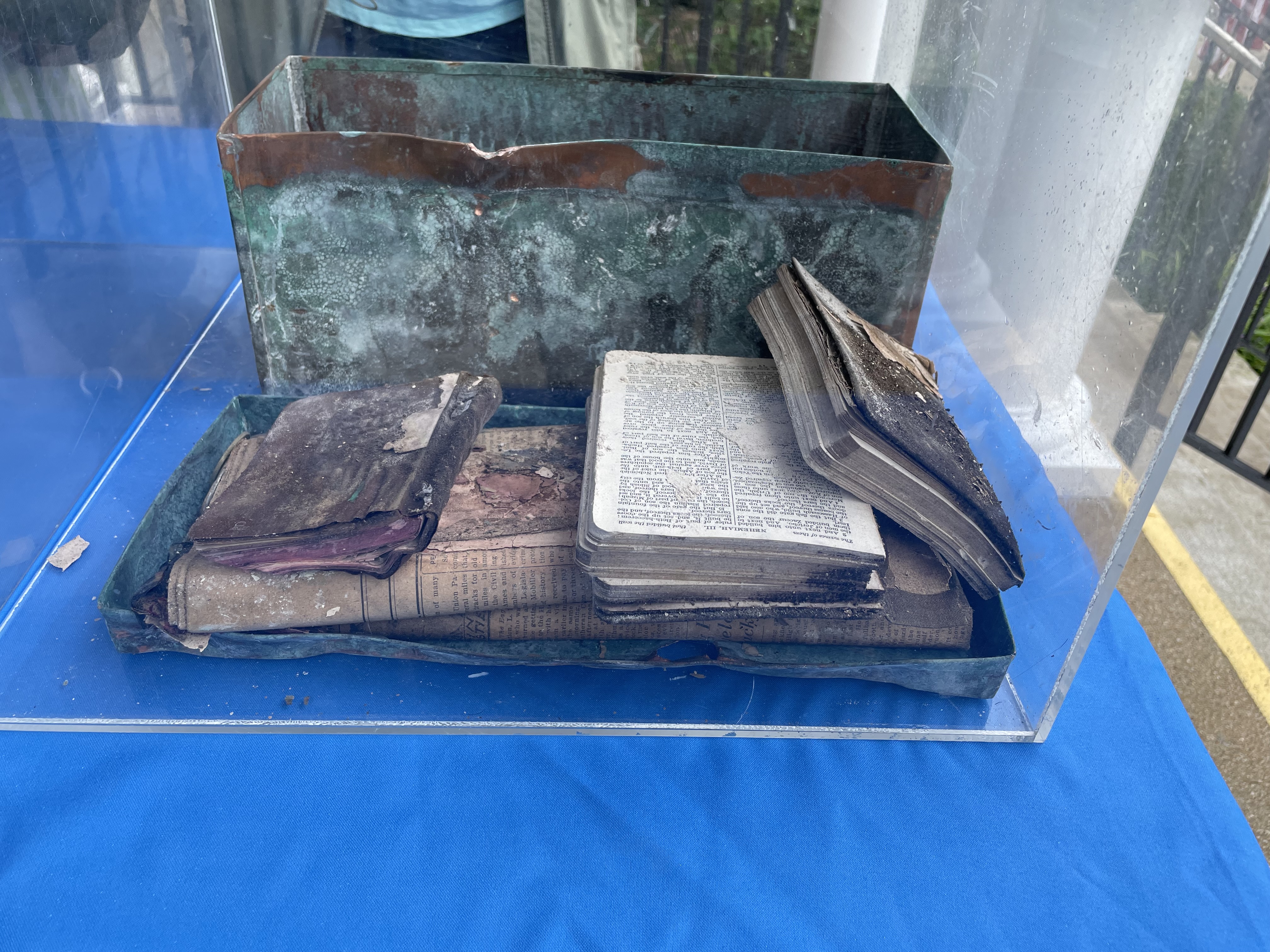
Corner stones at the Laurel Avenue school in Northport and at the Broadway School in Greenlawn were chopped out to remove time capsules from 1924.

The contents of the 1924 time capsule at the Greenlawn School

That’s because 1924 was a year of growth and change.  That year saw the greatest number of new buildings in Long Island history up to that point.  The decade saw tremendous growth in Huntington.  The population of the Town increased by 84% from 1920 to 1930.

Among other things that happened in 1924, the village of Huntington Bay was incorporated and the post office started delivering mail directly to people’s homes in Huntington village!

Throughout the 1920s, farms and estates were being subdivided.  The Cartledge Estate became Bay Hills (1924); the August Heckscher estate became Wincoma (1925); The Fleet Farm became Huntington Beach (1926) and Knollwood (1924); and the old Kissam farm in Greenlawn became Cedarcroft (1926).

In Greenlawn, land south of the railroad tracks and east of Broadway (Gates & Grafton Streets) was subdivided in 1921 as Maple Park.  Two years later, the property of Edward Smith was subdivided.  The land on the west side of Broadway was subdivided into 45 lots, including a large lot for a new school.  A year later Smith’s property across the street was subdivided into 93 lots (Fenwick & Lawrence Streets).  The rest of his farm later became the high school.

This increased development required increasing the number of schools.  During the 1920s, new schools were built in Northport, Halesite, Huntington, Huntington Station, Cold Spring Harbor, Melville and Greenlawn.  The South Huntington and West Hills School district merged to better address the population boom.

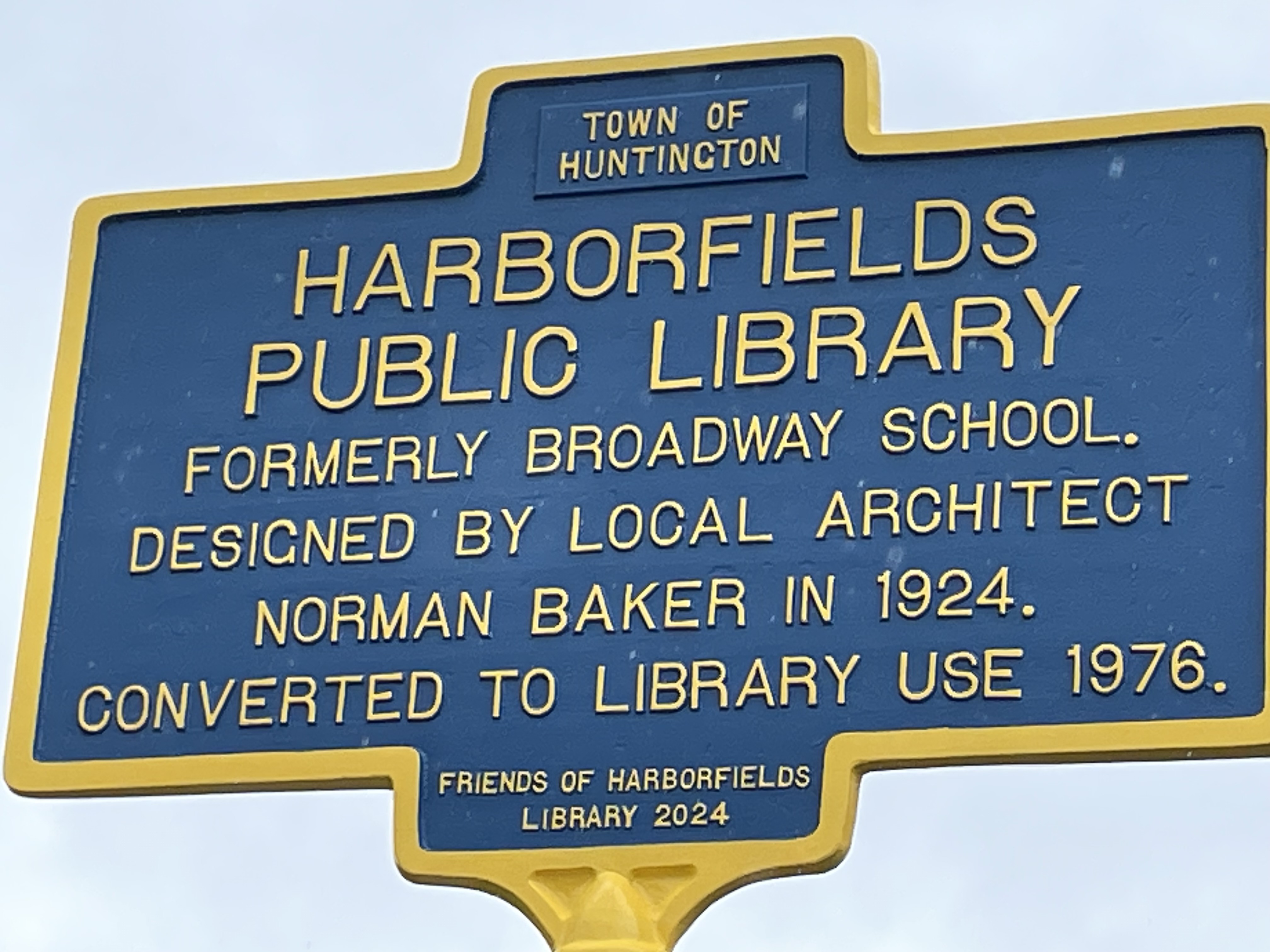
Many of those schools have survived and been repurposed.  Adoptive re-use is critical to the survival of historic buildings.  The Greenlawn, later Broadway School, may have outlived its usefulness as a school, but it did not outlive its usefulness to the community. It has found its second act as the home of the Harborfields Library.  Today, the Greenlawn community celebrated not only the centennial of the Greenlawn School, but also the transformation of the building into a new library half a century ago.

Other second acts include the Northport High School on Laurel Avenue which became a school administrative center; the Main Street School in Cold Spring Harbor is now the DNA Learning Center; the Melville School is now the Melville branch of the Half Hollow Hills Library; Lincoln School in Huntington Station is now the Lincoln Farm apartments; and the Nathan Hale School in Halesite is now co-op apartments.

Harborfields Library, formerly the Broadway School, formerly the Greenlawn School

Read Full Post »