This has not been a good year for cornerstones.
Corner stones at the Laurel Avenue school in Northport and at the Broadway School in Greenlawn were chopped out to remove time capsules from 1924.
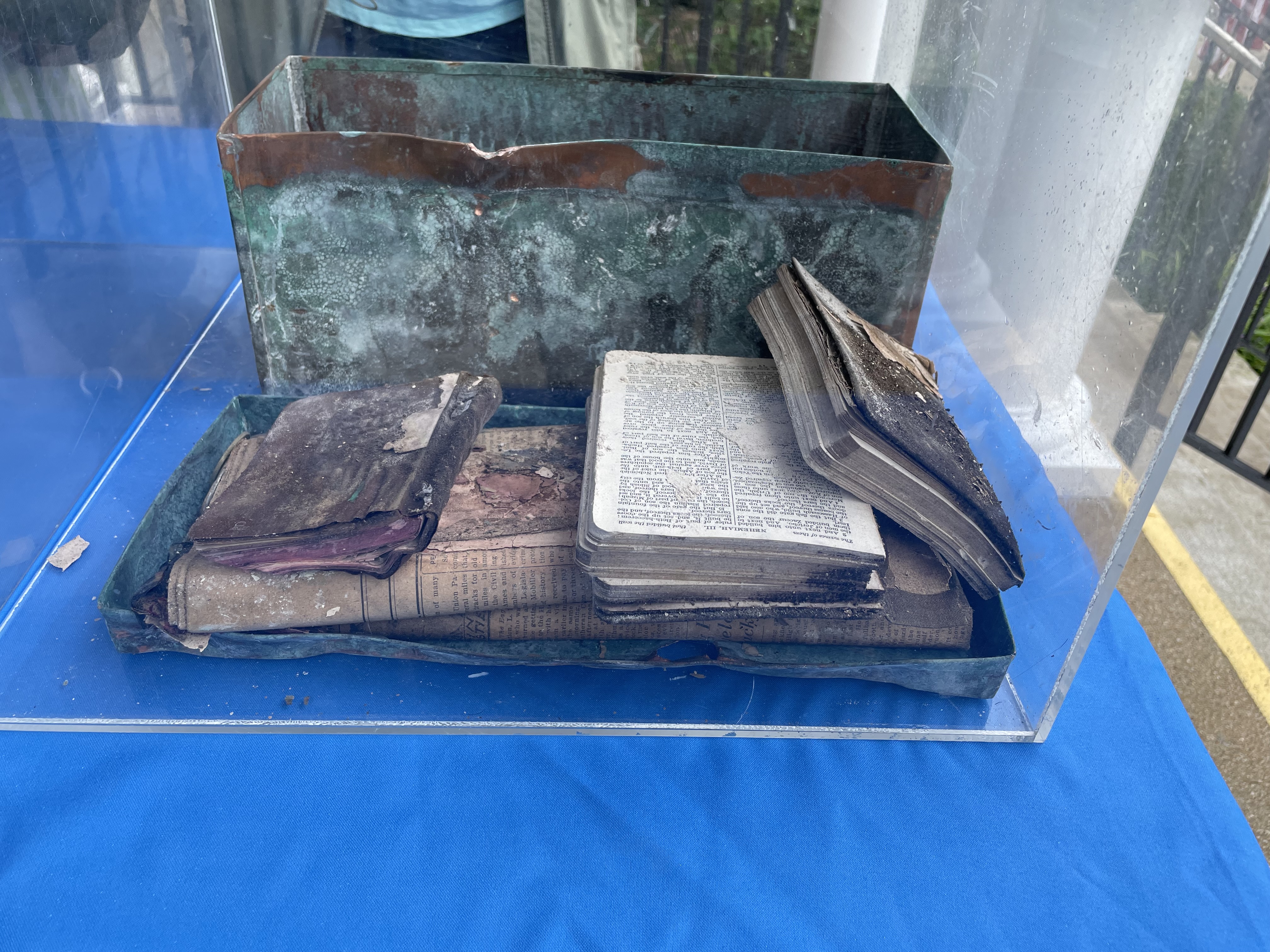
That’s because 1924 was a year of growth and change. That year saw the greatest number of new buildings in Long Island history up to that point. The decade saw tremendous growth in Huntington. The population of the Town increased by 84% from 1920 to 1930.
Among other things that happened in 1924, the village of Huntington Bay was incorporated and the post office started delivering mail directly to people’s homes in Huntington village!
Throughout the 1920s, farms and estates were being subdivided. The Cartledge Estate became Bay Hills (1924); the August Heckscher estate became Wincoma (1925); The Fleet Farm became Huntington Beach (1926) and Knollwood (1924); and the old Kissam farm in Greenlawn became Cedarcroft (1926).
In Greenlawn, land south of the railroad tracks and east of Broadway (Gates & Grafton Streets) was subdivided in 1921 as Maple Park. Two years later, the property of Edward Smith was subdivided. The land on the west side of Broadway was subdivided into 45 lots, including a large lot for a new school. A year later Smith’s property across the street was subdivided into 93 lots (Fenwick & Lawrence Streets). The rest of his farm later became the high school.
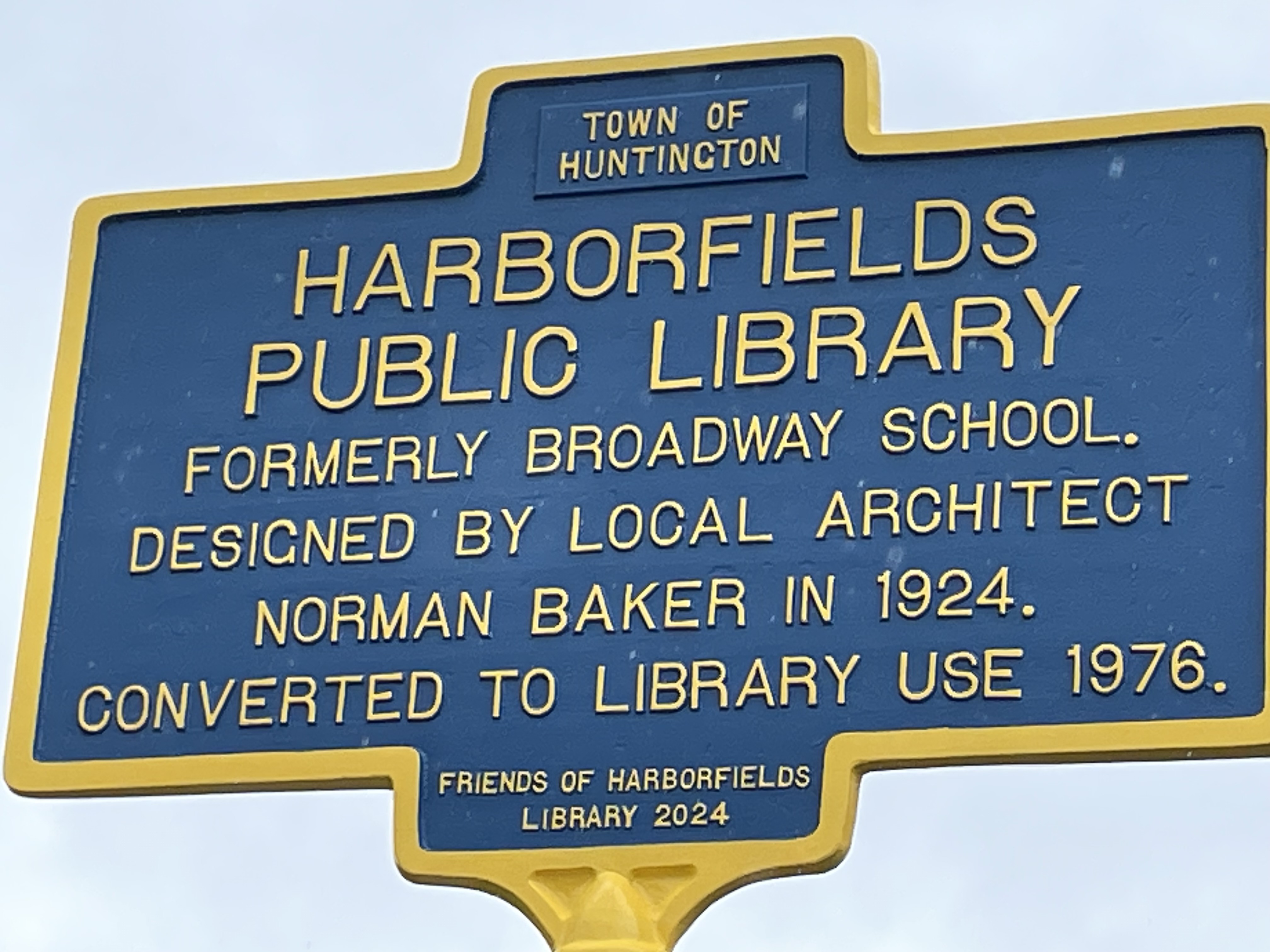
This increased development required increasing the number of schools. During the 1920s, new schools were built in Northport, Halesite, Huntington, Huntington Station, Cold Spring Harbor, Melville and Greenlawn. The South Huntington and West Hills School district merged to better address the population boom.
Many of those schools have survived and been repurposed. Adoptive re-use is critical to the survival of historic buildings. The Greenlawn, later Broadway School, may have outlived its usefulness as a school, but it did not outlive its usefulness to the community. It has found its second act as the home of the Harborfields Library. Today, the Greenlawn community celebrated not only the centennial of the Greenlawn School, but also the transformation of the building into a new library half a century ago.
Other second acts include the Northport High School on Laurel Avenue which became a school administrative center; the Main Street School in Cold Spring Harbor is now the DNA Learning Center; the Melville School is now the Melville branch of the Half Hollow Hills Library; Lincoln School in Huntington Station is now the Lincoln Farm apartments; and the Nathan Hale School in Halesite is now co-op apartments.

 Huntington History
Another repurposed school was Simpson Jr. High