Uplands Farm on Lawrence Hill Road in Cold Spring Harbor, the home of the Long Island Chapter of The Nature Conservancy, offers a peaceful oasis and a reminder of Huntington’s agricultural past. For most of its history the farm was owned by women. It is through the foresight and generosity of one of those women, the farm has more or less retained its original configuration and layout for over two centuries.

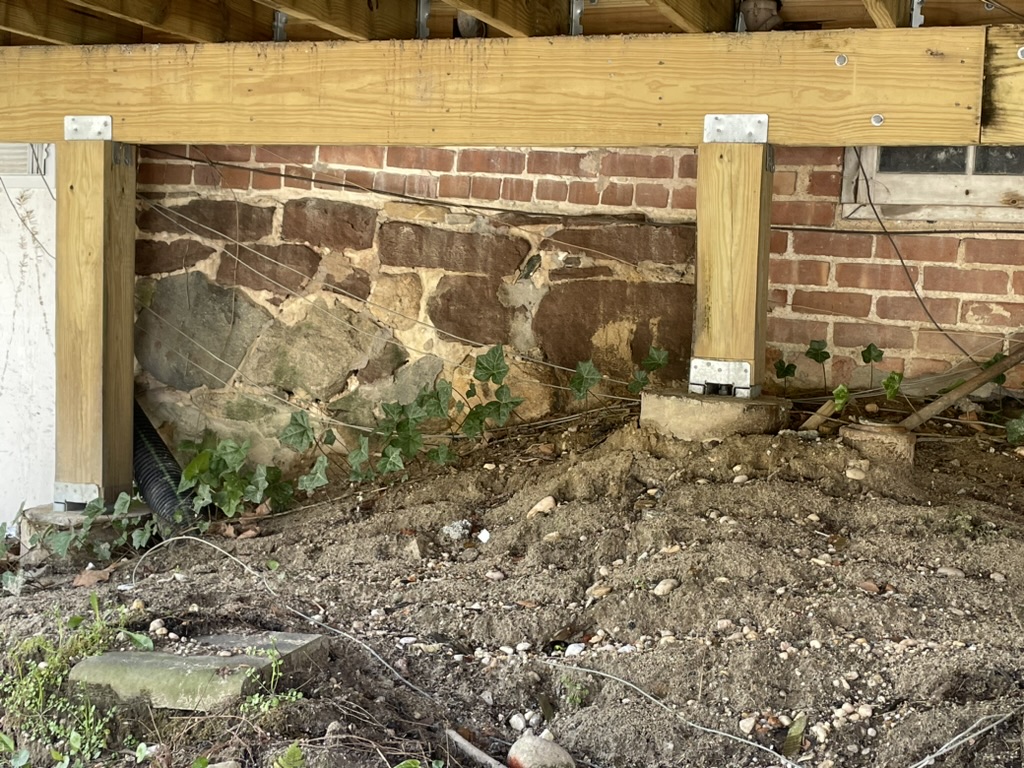
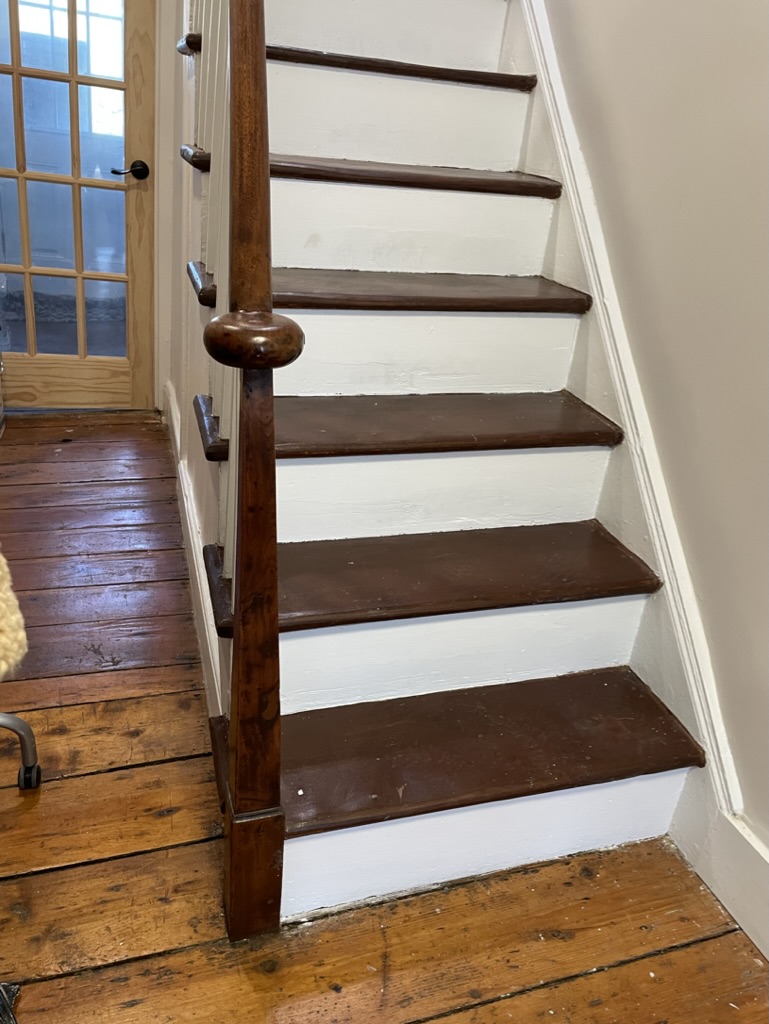
The story starts in 1791 when John Hewlett gave his son Isaac Hewlett was given a large tract of land on the east side of Cold Spring Harbor’s lower mill pond, now St. John’s Lake.[1] Isaac may well have raised sheep on his upland property to supply his family’s woolen factories. The 100-acre parcel extended up the hill to take in what is now The Nature Conservancy’s Uplands Farm on Lawrence Hill Road. Isaac appears to have lived at the top of the hill (the 1907 genealogy of the Jones family says Isaac lived “on the high ground east of the mill ponds”[2]). At Uplands Farm is a nineteenth century farmhouse with a stone foundation, indicating an early construction date. Jane Page, daughter of the last owner, Jane Nichols, contended that “”this house is a former barn, moved onto the foundation after the original house burned.”[3]
Sometime before 1837, Isaac conveyed the northwest corner of the farm to his brother Divine Hewlett to be used as a burying ground. The deed for this conveyance has not been found and may never have been recorded. However, an 1837 deed (Liber 30, page 61) in which Isaac’s son Alfred conveys an undivided half interest in the farm to his mother, describes the property as running along Harbor Road “to land of Isaac Hewlett sold to Divine Hewlett to the African Burying Ground.” It is awkwardly worded, but it indicates that Isaac sold land to his brother Divine for use as a burial ground for Africans. A deed from 1847 (Liber 46, page 322) refers to it as the Negro Burying Ground. Divine Hewlett served as a Huntington Overseer of the Poor in 1824 and 1825 (he was also Huntington Trustee from 1817-1820 and 1822-1825). He may have acquired the land in connection with his duties as Overseer of the Poor.
Isaac died in 1838. After his death, his family sold two small lots fronting on Harbor Road at the western edge of the farm. In 1845, his widow and two daughters sold a lot to Gideon Nichols[4], who is identified as a carpenter on the 1850 census. Nichols built the house which still stands at 327 Harbor Road. In 1856, Nichols sold this house to Townsend Jones[5] and purchased land on Woodbury Road and built what is now 465 Woodbury Road.[6]
Ten years later, in 1855, Isaac’s son Alfred sold some land to carpenter Daniel Abbott, who built the house which still stands at 315 Harbor Road.[7] Abbott lived here with his wife Dorcas and a younger woman names Frances Nichols (it is unknown if she was related to Gideon). Dorcas died in 1872, and Daniel married Frances. In 1876, Abbott also sold his property to Townsend Jones.[8]


Townsend Jones, whose house across the street at 326 Harbor Road was built for him in 1855,[9] seems to have used the two houses on the east side of Harbor Road for his employees. It is possible that carpenters Nichols and Abbott helped build Townsend’s house, but there is no evidence for that assumption.
Meanwhile, Isaac’s family continued to live on the farm at the top of the hill. His son Alfred married Lydia Ann Darling in 1840, and they welcomed their first child, Jane, the following year. A son was born in 1846, but he died two months before his third birthday. Another son was born in 1848. He and his mother died the following year during a cholera outbreak.[10]
Following her mother’s death, Jane Hewlett lived on the 100-acre farm with her father, her grandmother and aunts and uncles. On the census records, her uncle Oliver is listed as the head of the household. He died in 1867. In 1868, Jane married James A. Simonson. The couple lived with Jane’s father and her aunt Sarah as well as a couple of servants. The other aunts had died by then. According to the 1870 census agricultural schedule, the Hewlett farm had 2 horses, 3 milch cows, and 14pigs. The farm produced 40 bushels of wheat, 50 bushels of rye, 500 bushels of corn, 100 bushels of potatoes, 300 pounds of butter, and 50 tons of hay.
Tragedy struck the family again in January 1871 when Jane’s father tried to take his own life by cutting his face and neck with a knife.[11] He was later committed to the Utica Asylum for insane persons[12] and in 1880 was living in the Suffolk County Poor House in Yaphank.[13] Jane’s Aunt Sarah, who had never married, died just a few months later in April 1871. Sarah, who at the time of her death owned the farm, left her entire estate to Jane,[14] which should have been welcome news. But relatives contested the will. These wealthy relatives, who reportedly had not visited Aunt Sally for many years, took a sudden interest in their elderly relative shortly before she died. Meanwhile, Jane had been living with and taking care of Aunt Sally for some twenty years. In addition to caring for her aunt, Jane and her husband managed the farm. One of these wealthy relatives urged Aunt Sally to sell all her personal property and move in with him in Huntington. He said Jane and her husband were running the farm into the ground. But Aunt Sally wasn’t persuaded. The nephew challenged the will on the grounds of mental incapacity and undue influence.[15] The surrogate upheld the will and title to the farm passed to Jane.[16]
Jane and her husband borrowed money from her second cousin Townsend Jones, secured by a mortgage on the farm. Townsend was the son of John H. Jones, of whaling company fame and was considered one of the best auctioneers in New York City. A few years after his death in 1891, his widow and two sons, as executors of his will, commenced a foreclosure action against Simonson. Pursuant to a court order, the farm was auctioned off. The executors were the high bidders.[17]
After Townsend Jones’ widow died in 1901, the farm was conveyed by the estate to his son Joshua T. Jones.[18] Joshua had worked at the Atlantic Mutual Insurance Co. in the city until he retired in 1890 and returned to Cold Spring Harbor to live with his parents in the house on St. John’s Lake.[19] Joshua hired Henry McKowen to manage the farm on his behalf.[20] Joshua died in 1905.[21] His widow Althea Augusta inherited his property, including the farm. In 1907, she married John Henry Jones Stewart,[22] who was her late husband’s first cousin and was also associated with the Atlantic Mutual Insurance Co.[23]
In late 1909, Althea Augusta sold 75 acres of the farm to Dorothy Lawrence, wife of Effingham Lawrence, a stockbroker whose family first settled in Bayside, Queens in the mid-seventeenth century.[24] The couple commissioned a formal brick Georgian mansion on one of the hilltops overlooking the harbor. Henry McKowen continued as superintendent of the farm until 1912.[25] After McKowen left, Lawrence had the old Simonson farmhouse remodeled for a new superintendent, J.C. Oley.[26] Lawrence raised cattle, chickens and prize-winning dogs on the farm.[27] The Lawrences did not stay in Cold Spring Harbor for long—they sold the estate in 1920 to Treva Diebold of Cleveland[28]—but they were here long enough to have the street that passed in front of the farm, Lawrence Hill Road, named after them.
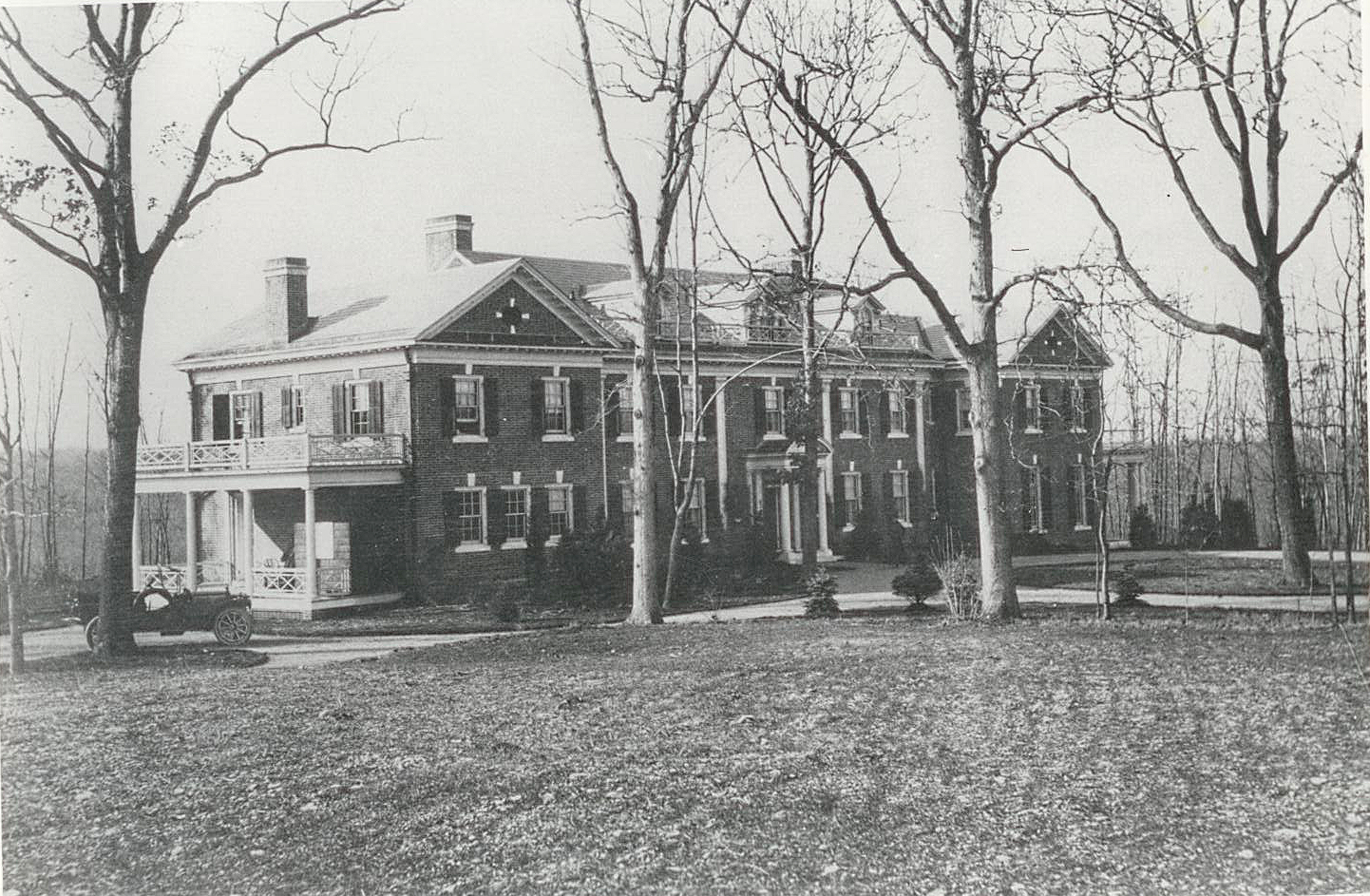
The Diebolds did not stay long either. They sold the farm in 1926 to Jane N. Nichols,[29] daughter of J.P. Morgan, Jr. and wife of George Nichols, whose family had a large estate farm in Laurel Hollow (it is doubtful that George Nichols was related to Gideon Nichols). Nichols was a partner in the family cotton goods business and a noted yachtsman. At his death in 1950, the New York Times hailed him as “one of the greatest yachtsmen in the history of the sport in the United States.”[30] Nichols called his estate Uplands. Some locals still refer to the property as Nichols Field. Local legend claims that the estate was purchased by J.P. Morgan, Jr., as a wedding gift for his daughter. However, the couple married in 1917, and the estate wasn’t purchased until 1926. Moreover, the author recalls that at a Nature Conservancy event in 1993, Mrs. Nichols’ daughter Jane Page denied that story as have other relatives in recent correspondence.
Although Uplands had a Gold Coast mansion, it was also a working farm, as it had been throughout the nineteenth century. Nichols raised prize-winning Guernsey cows on the farm and was concerned about environmental issues. In 1957, federal officials conducted what was described as the “largest single aerial spraying job ever conducted.” The tri-state area, including most of Long Island, was sprayed with DDT to eradicate gypsy moths. The aerial spraying included the farm fields at Uplands. Nichols monitored the residue of the chemical in her cows’ milk and provided the information to Majorie Spock who had initiated a lawsuit against the government seeking an injunction based on the project’s violation of Long Islanders’ fifth amendment rights. The evidence introduced at the trail, including Nichols’ data on DDT residue in her cows’ milk, was a key foundation to Rachel Carson’s book Silent Spring, which was published in 1962 and led to the banning of DDT ten years later.[31]
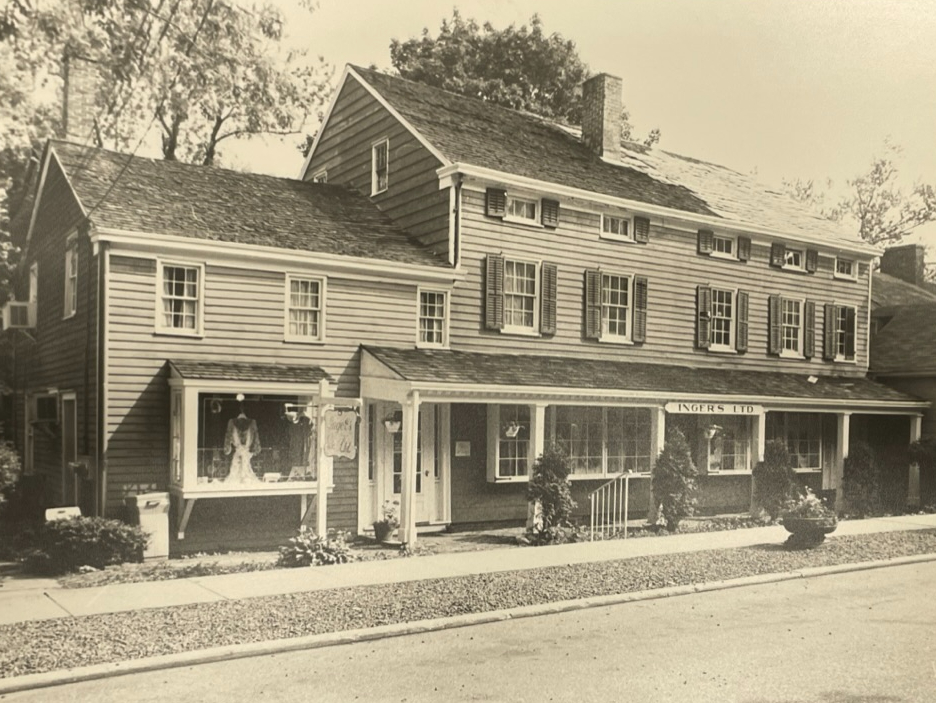
Meanwhile, the two houses built on Harbor Road continued to be used by employees of the Jones family, such as Patrick Donohue (1875-1954) who worked for Townsend Jones, Jr. and his daughter Marguerite Knight for 40 years and lived in the southern house.[32] The two houses remained in the Jones family until the 1940s when they were sold to the last private owners, Louis & Louise Bonn and Russell & Ann Carhart. In the 1960s, they were seized by eminent domain by the State for a right of way for a never built parkway to Caumsett State Park on Lloyd Neck. After the State took ownership of the houses, the Carhart and Bonn families continued to live here with yearly leases until the mid-1970s. For a while the northern house was leased to the Lab for housing. Today the houses sit vacant and in poor condition.
Nichols gave up dairy farming the same year Carson’s book was published. The next year, she leased the old dairy barn and chicken house to the Huntington Township Art League, now the Art League of Long Island.[33] The barn was converted into artists’ studios and gallery space, where local artists could create and sell artworks, providing the Art League, which had been founded in 1955, with its first home.
Within a decade, however, the Art League was homeless again because in 1971 Nichols decided to donate 36 acres of the farm, including the old cow barn, to the Nature Conservancy with plans to donate an additional 17 acres within a year. She bequeathed the rest of the farm, including the 1910 Georgian mansion, to the Nature Conservancy when she died in 1981. The Nature Conservancy subdivided the mansion on a five-and-a-half-acre parcel and sold it to a private owner. The 97-acre sanctuary, which serves as the headquarters for the Conservancy’s Long Island chapter, was dedicated to Jane Nichols’ memory in 1983.[34]

Soon thereafter, the Nature Conservancy leased a section of the farm to the Cold Spring Harbor Lab to grow corn to continue the research started by Barbara McClintock, who won the Nobel Prize for Physiology or Medicine in 1983. The Nature Conservancy later sold 10.3 acres of the farm to the Lab, including many of the old farm buildings and the Simonson farmhouse, which is now used as housing for scientists.[35] In 2003, the Lab built a 16-unit dormitory along the western edge of its property at Uplands.[36]

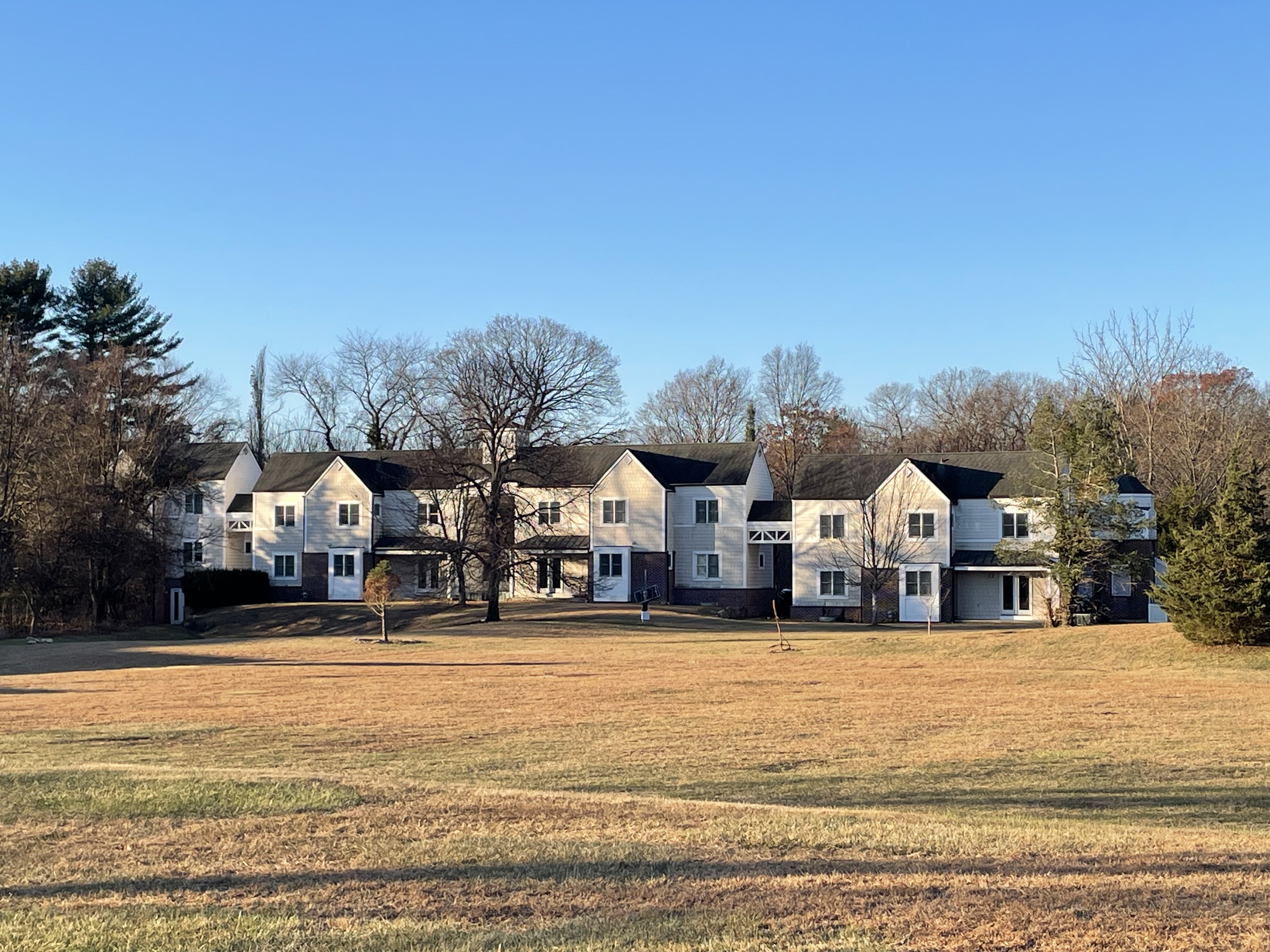
The old farm buildings have been repurposed for scientific research. While appearing as they did when built in the early twentieth century, the buildings contain state of the art equipment to advance scientific research on issues such as the effects of climate change on plants.
[1] The Jones Family of Long Island: Descendants of Major Thomas Jones (1665-1726) and Allied Families, by John Henry Jones (1907), page 115
[2] Ibid.
[3] Building-Structure Inventory Form for Unique Site No. 103-0499, New York State Historic Preservation Office, Summer 1979.
[4] Suffolk County Clerk’s Office Deed Liber42, page 115.
[5] Suffolk County Clerk’s Office Deed Liber 87, page 448.
[6] Suffolk County Clerk’s Office Deed Liber 191,page 149.
[7] Suffolk County Clerk’s Office Deed Liber 83, page 270.
[8] Suffolk County Clerk’s Office Deed Liber 222, page 360
[9] Suffolk County Clerk’s Office Deed Liber 87, page 446; the deed transferring the three acre parcel from John H. Jones to his son Townsend refers to the property “upon which the party of the second partis now erecting a Dwelling House.”
[10] Jones Genealogy page 346.
[11] The Long-Islander, January 20, 1871.
[12] The Long-Islander, July 28, 1871.
[13] 1880 Census.
[14] The Long-Islander, July 28, 1871.
[15] The New York Sun, July 19, 1871, page 2.
[16] The New York Times, February 3, 1871, page 10.
[17] Suffolk County Clerk’s Office Deed Liber 413, page 112.
[18] Suffolk County Clerk’s Office Deed Liber 505, pages 370 & 372.
[19] Jones Genealogy page 191.
[20] The Long-Islander, October 16, 1903; see also McKowen Brothers: Dairy Farmers and Bobsledders; posted on this site November 25, 2011.
[21] Jones Genealogy page 191.
[22] The New-York Tribune, February 12, 1907, page 7.
[23] Times Union, February 5, 1926, page 10.
[24] The Long-Islander, January 21, 1910; Suffolk County Clerk’s Office Deed Liber 707, page 185; The New York Times, September 10, 1956.
[25] The Long-Islander, April 5, 1912.
[26] The Long-Islander, April 12, 1912.
[27] The Long-Islander, December 25, 1914, April 30, 1915, June 2, 1916, February 13, 1920.
[28] Brooklyn Eagle, March 14, 1920; The Suffolk County Review, April 23, 1920; Suffolk County Clerk’s Office Deed Liber 998, page 124.
[29] The Suffolk County Review, March 18, 1926.
[30] The New York Times, August 15, 1950.
[31] How To Sell A Poison, by Elena Conis (Bold Type Books 2022), page 118
[32] The Long-Islander, January 21, 1954; the 1920 and 1930 census show Donohue living on Harbor Road with his wife and two sons.
[33] The Long-Islander, March 28, 1963; April 25, 1963.
[34] Newsday, November 29, 1971, page 7; June 2, 1983, page 23; New York Times, June 25, 1995, Section 13LI, page 15.
[35] Newsday, January 20, 1985, page 19.
[36] Town of Huntington Building Department Records.


 Huntington History