After the Battles of Lexington and Concord in April 1775, the colonies were in a state of war with Great Britain, but it was not yet a war for independence. To help fight that war the Continental Congress authorized New York to raise as many as 3,000 troops to be paid by Congress. Even though most of these troops were from areas north of New York City, one Huntington man joined.
Ephraim Oakes was 22 years old when he “took a tour into Orange County in the Town of Goshen.” While there, a call for soldiers was issued and he enlisted for a five-month tour of duty in the Third New York Regiment under Colonel James Clinton around June 1, 1775. At around the time George Washington assumed command of American troops surrounding Boston, the Continental Congress authorized an invasion of Canada to forestall a British invasion of the rebellious colonies from the north and to try to convince the French settlers to join the fight against the British. The invasion force was made up mostly of New York and Connecticut troops under the command of General Philip Schuyler. Oakes and his fellow recruits marched to Albany and then to Lake Champlain. General Richard Montgomery assumed command when Schuyler fell ill. At the beginning of September, they arrived at Fort St. John, about 22 miles from Montreal. After a six-week siege, the fort fell. The Americans next captured Montreal in mid-November. By this time, Oakes’ enlistment had expired, but he re-enlisted for another six months.
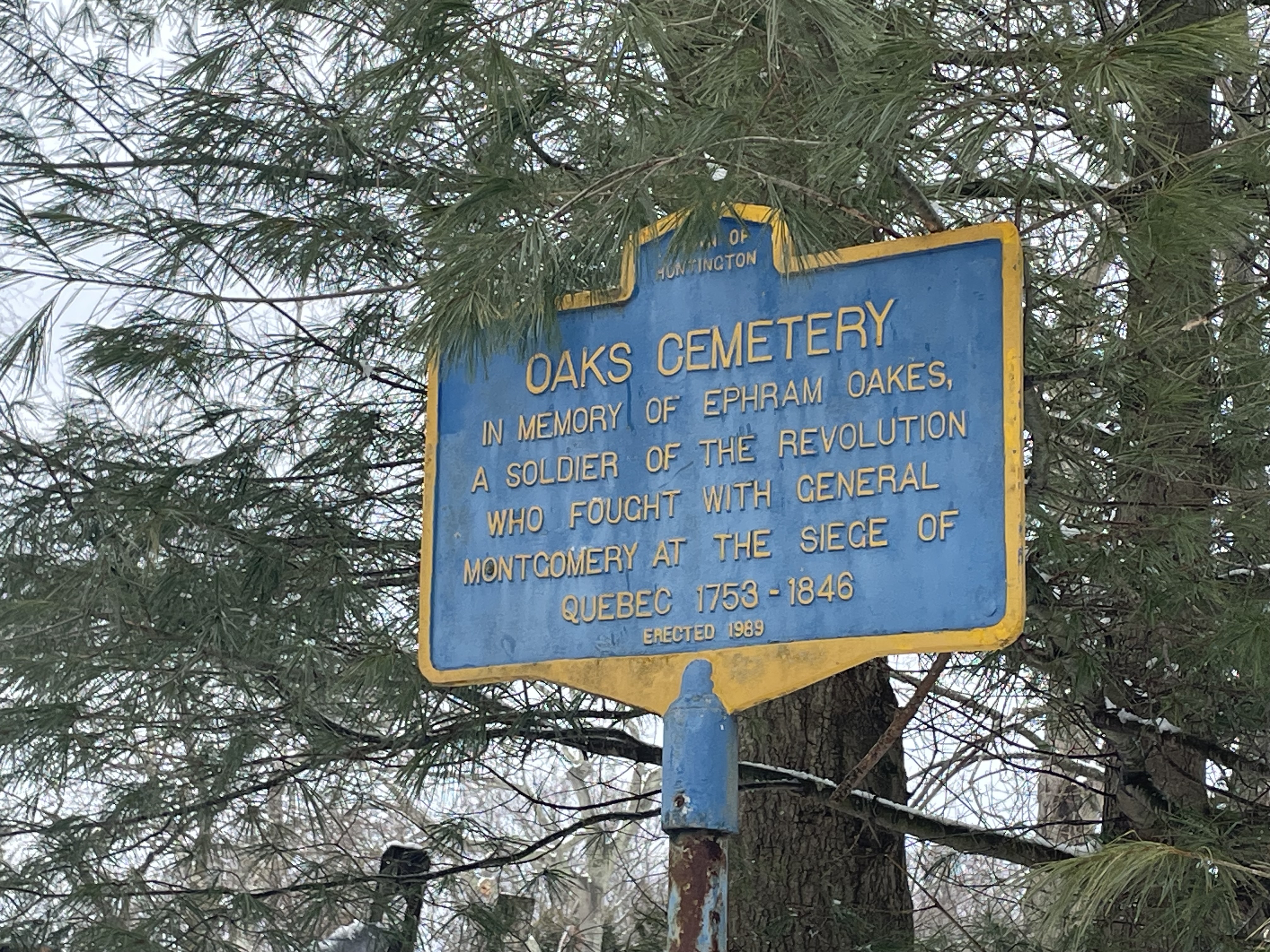
Meanwhile, Benedict Arnold led a smaller contingent from Boston through the forests of Maine to join Montgomery in an attack on Quebec City. The Americans attacked the city in the midst of a severe snowstorm on December 31. Montgomery was killed and Arnold was wounded. The attack was a failure. The Americans besieged the city until May 1776 when Oakes’ second enlistment expired. Again, he re-enlisted even though he hadn’t been paid. The Americans gave up trying to capture Quebec and returned to New York. Oakes then retraced his steps back to Goshen and then to New York City, arriving in the city the same day the British fleet was spotted off Sandy Hook. He then returned to Huntington. Shortly after he arrived home, the British took possession of Long Island. Someone reported to the British that Oakes was a Continental soldier and he was taken prisoner. It is not known how long he was held as a prisoner, but he was back in Huntington by September 1778, where he worked as a blacksmith and was forced to sign the Oath of Loyalty to the Crown as were all men on Long Island between the ages of 15 and 70. Those who refused to sign would be fined £5 and forced to leave Long Island with their families.
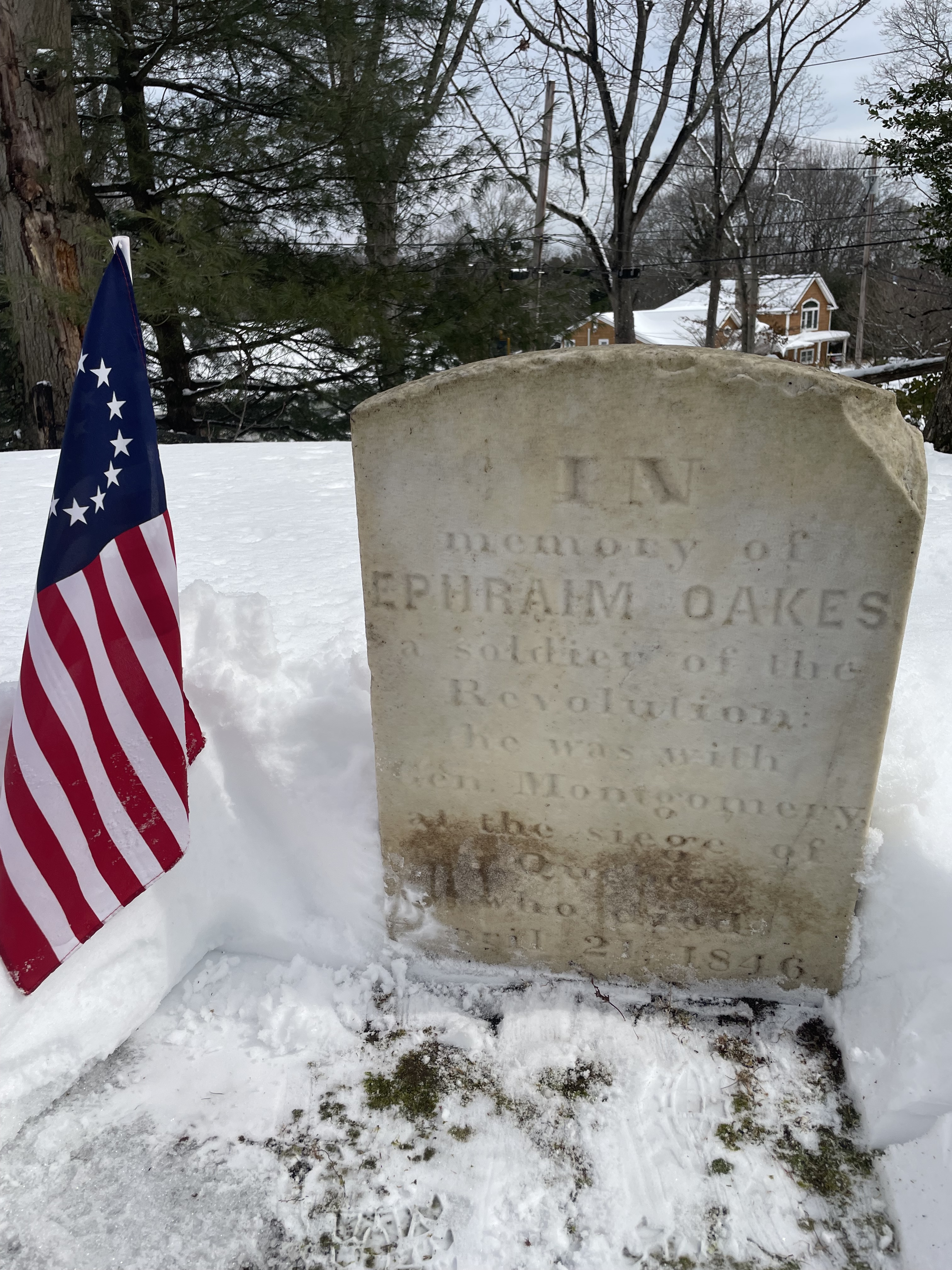
Oakes lived the rest of his life in the Elwood section of Huntington. His homestead was near the corner of what is now Godfrey Lane and Wilder Lane. He died in 1846 a month shy of his 93rd birthday and is buried in the Oakes Cemetery, located about 650 feet south of his home.
 Huntington History